What Really Matters When Buying Push-Pop Sushi Packaging?
Jump to Section:
I used to think push-pop sushi packaging was all about the “wow” moment. Later, I placed a few trial orders. But they all had some minor problems, such as loose caps, leaks, and malfunctions. That’s when I realised what was truly important when purchasing this kind of packaging.
If you are sourcing push-pop sushi packaging for your brand, you are not just buying a tube. You are buying food safety trust, delivery stability, and customer reviews. In this guide, I will walk you step-by-step through how to choose a high-quality push-pop sushi packaging, following the order of minimizing risk.
Does Your Push-Pop Sushi Packaging Meet Food Safety Standards?
When I buy food packaging, I start with one simple question: Can I confidently let my customers put this near their mouth? If I cannot answer that, nothing else matters.
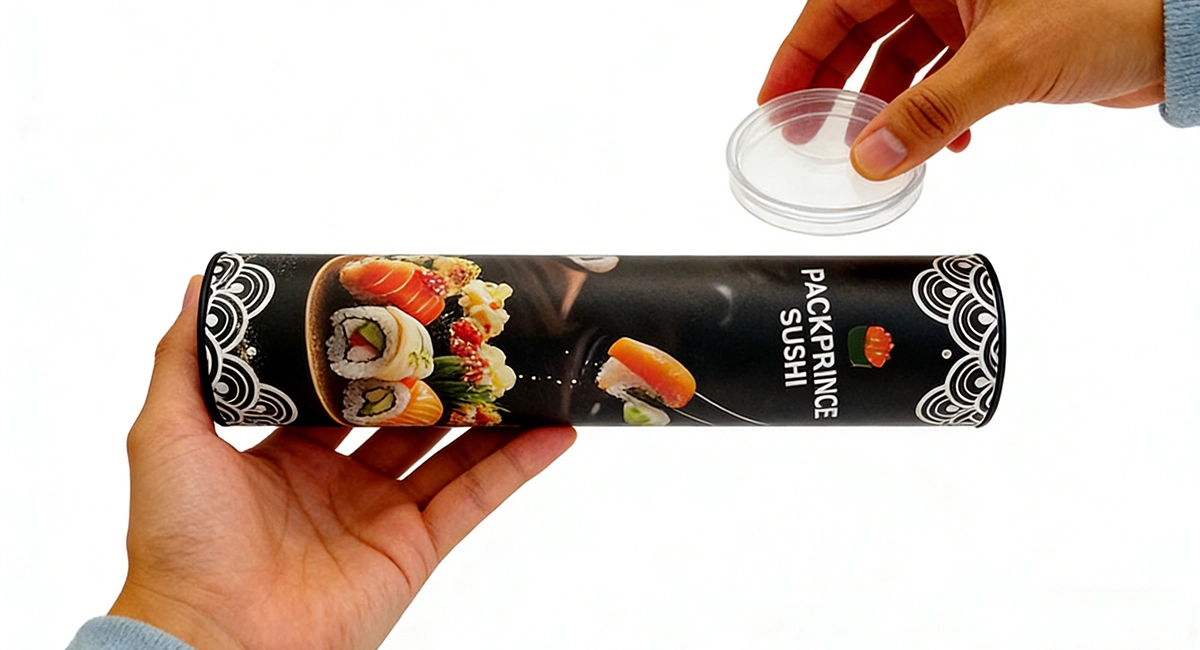
Food safety is not a marketing line. I want clear proof that the tube, the inner surface, the lid, and the soy sauce tube are made from food-grade materials and are safe for contact with sushi, moisture, and oil.
What I recommend you do:
- Ask the supplier to list the material for each part (tube body, lid, base, soy sauce tube).
- Ask for food-contact statements that match your market.
- Think about real conditions: cold storage, moisture, oil, and delivery time. Food-grade materials should stay stable and should not add a smell.
Food-grade is the foundation. A great design cannot protect your brand if the material trust is weak.
Why Do Some Push-Pop Sushi Packaging Leak from the Bottom?
Bottom leakage is usually not “random.” It comes from structure and stress.
Push-pop sushi packaging is different from trays because customers apply force. When the customer pushes upward, the bottom takes pressure. If the bottom is weak, it can flex. If the joint is not tight, micro gaps can open. If the material is brittle, it can crack or warp after repeated pushing.
Here are the most common bottom-leak causes buyers should watch:
| Bottom leak cause | What it looks like | What to check before buying |
|---|---|---|
| Weak base stiffness | Bottom feels soft | Ask for base thickness and build method |
| Poor sealing/joining | Wet ring at the edge | Request a push test sample |
| Loose fit between parts | Base shifts or tilts | Test push motion in small steps |
| Material weakness | Cracks after cold | Do a cold-storage test |
A simple buyer test you can run:
- Fill the tube with a wet “dummy load” (even a wrapped napkin with water).
- Push in 5 small steps.
- Wait 30 seconds.
- Check for any wet ring at the bottom edge.
If it passes this, you lower your risk a lot before placing a bulk order.
How to Keep Sushi Fresh in Push-Pop Packaging?
Freshness comes down to one main point: the lid seal.
If the lid is not sealed well, air moves in and out. Sushi dries faster. It can also pick up outside odors during delivery. A sealed lid helps keep the product stable from the kitchen to the customer.
As a buyer, you can ask the supplier for a simple sample or have them film a quick test:
- The lid should close with a clear, confident “lock” feeling.
- The sushi pusher box should remain closed after shaking.
- Pour out the soy sauce tube to check for leaks.
Is the Soy Sauce Tube in Push-Pop Sushi Packaging Completely Sealed?
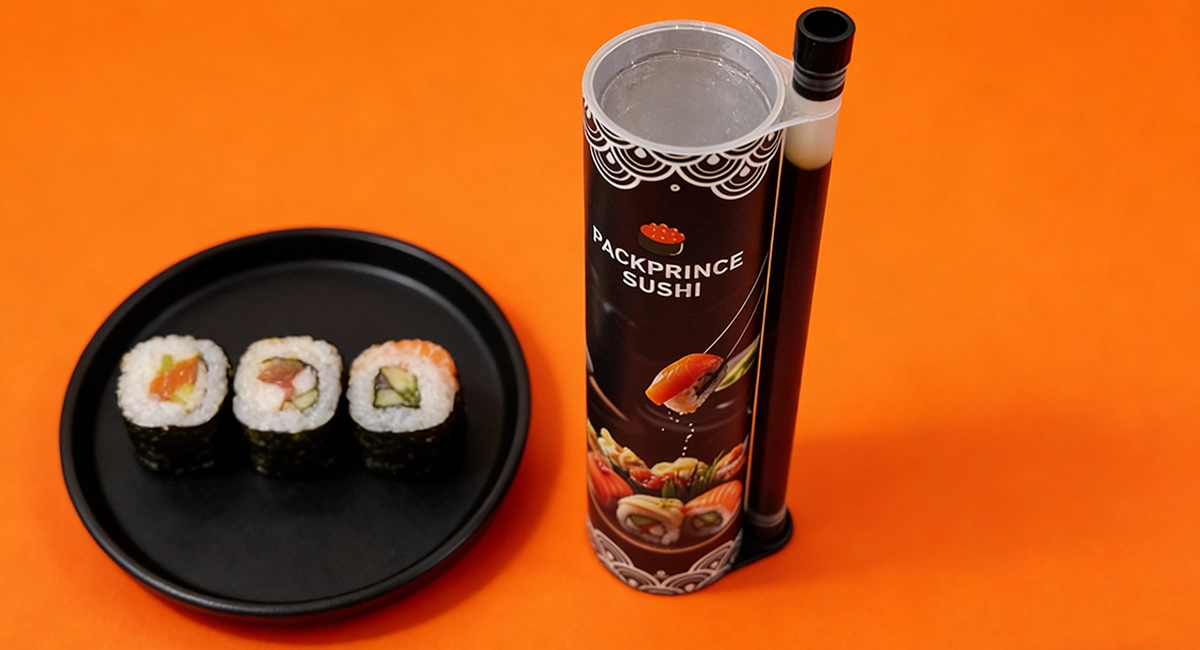
Soy sauce is a convenience feature, but only if it is truly sealed. The key point is not the tube itself. It is the small lid on the sauce tube.
A good sauce tube lid should:
- Close firmly and stay closed under movement
- Does not leak if squeezed lightly in a bag
This is different from bottom leakage. Bottom leakage is about push force and base stress. Sauce leakage is about a small cap seal holding up during carry and shaking.
Here is a test checklist:
| Sauce tube seal check | How you test it | What “good” looks like |
|---|---|---|
| Shake test | Shake 10 seconds | No drips at the cap |
| Squeeze test | Light squeeze 3 times | No seep at the seal line |
| Open-close repeat | Open/close 5 times | Seal stays consistent |
Why Choose PP as the Material for the Soy Sauce Tubes in Push-Pop Sushi Packaging?
When comparing the materials used for sauce tubes, I only care about one thing: how well does it perform in actual use? That’s why I prefer polypropylene (PP) for my sauce tubes.
PP is incredibly practical because it’s tough and durable, less prone to cracking than many brittle plastics, and perfect for everyday food packaging. It withstands compression and minor impacts much better, which is exactly what sauce tubes often encounter in delivery bags and in the hands of customers.
Another reason I like PP is that it’s also more environmentally friendly and easier to sort compared to some mixed-material packaging.
What Advantages Should a Good Push-Pop Sushi Packaging Supplier Possess?
Once the product characteristics are confirmed, selecting a supplier becomes crucial. It’s not enough to simply choose a supplier capable of producing high-quality sushi boxes; they must also keep pace with business and market demands. At this point, buyers should also consider the following:
- Clear specifications and fast replies: You should receive direct answers regarding size, materials, lid type, and testing.
- Sampling support: A supplier should guide you through push tests, sealing tests, etc.
- Stable lead times: You need reliable delivery, not surprises.
- Print quality options: If branding matters, you may require high-definition printing.
- Cost control: Pricing should scale as your sales volume increases.
Shipping speed: Fast shipping helps with testing, but stable shipping is more important in the long term.
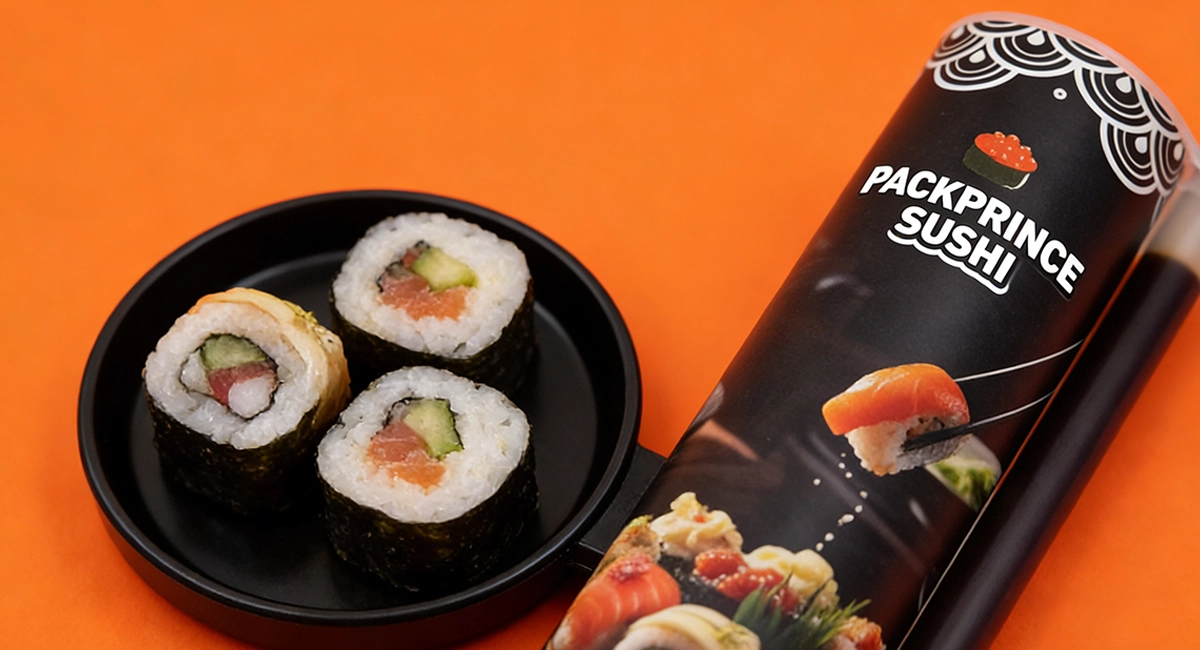
If you are buying push-pop sushi packaging, focus on the basics first: food-grade materials, a sturdy bottom that holds up during pushing, a sealed lid to protect freshness, and a fully sealed PP soy sauce tube to prevent messy leaks. After that, choose a supplier who can prove consistency, testing support, and stable lead times.
For reliable sample proposals and reliable production support, please contact info@packprince.com with your order quantity and brand requirements. Our professional packaging experts will provide you with a quick quote and sample proposal.