Which Stores Are Suitable for Selling Push Pop Sushi?
Jump to Section:
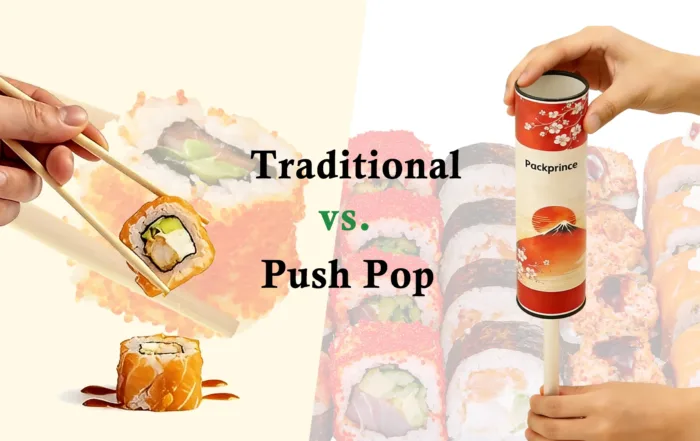
If you run a sushi business and keep seeing the “push pop sushi” format online, you’re not alone. Sushi push pop packaging has become a viral, highly shareable way to serve sushi in a cylindrical tube—customers push from the bottom and eat piece by piece from the top.
But a format being popular doesn’t automatically mean it fits your store. The real question is:
- Which business types can sell it profitably without breaking operations?
- How should each channel merchandise itself?
- What packaging details make it work (or fail)?
Below is a practical guide for five store scenarios, plus the packaging requirements that determine whether push pop sushi becomes a repeatable SKU or a short-lived trend.
What is sushi push pop packaging (and why customers care)?
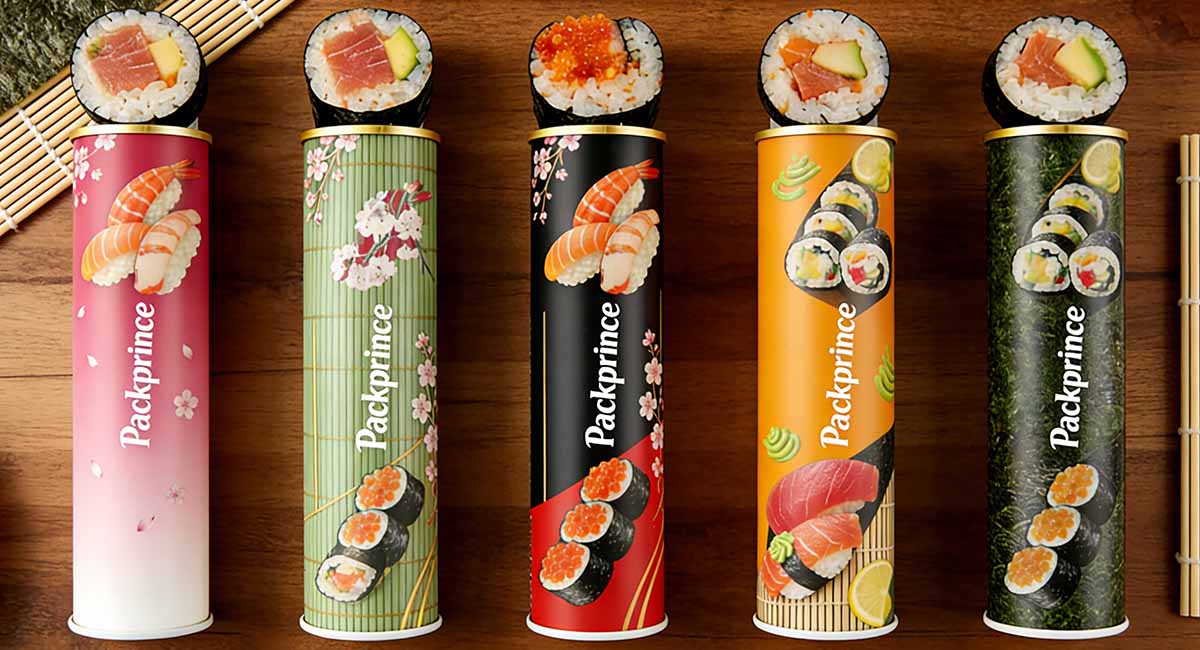
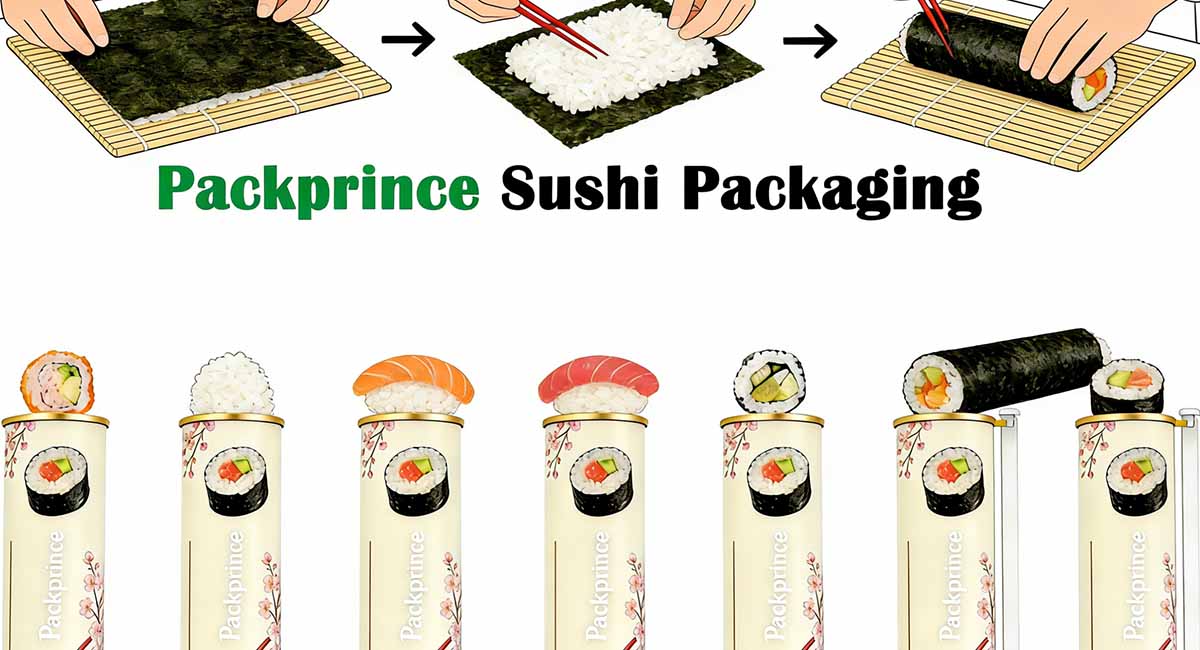
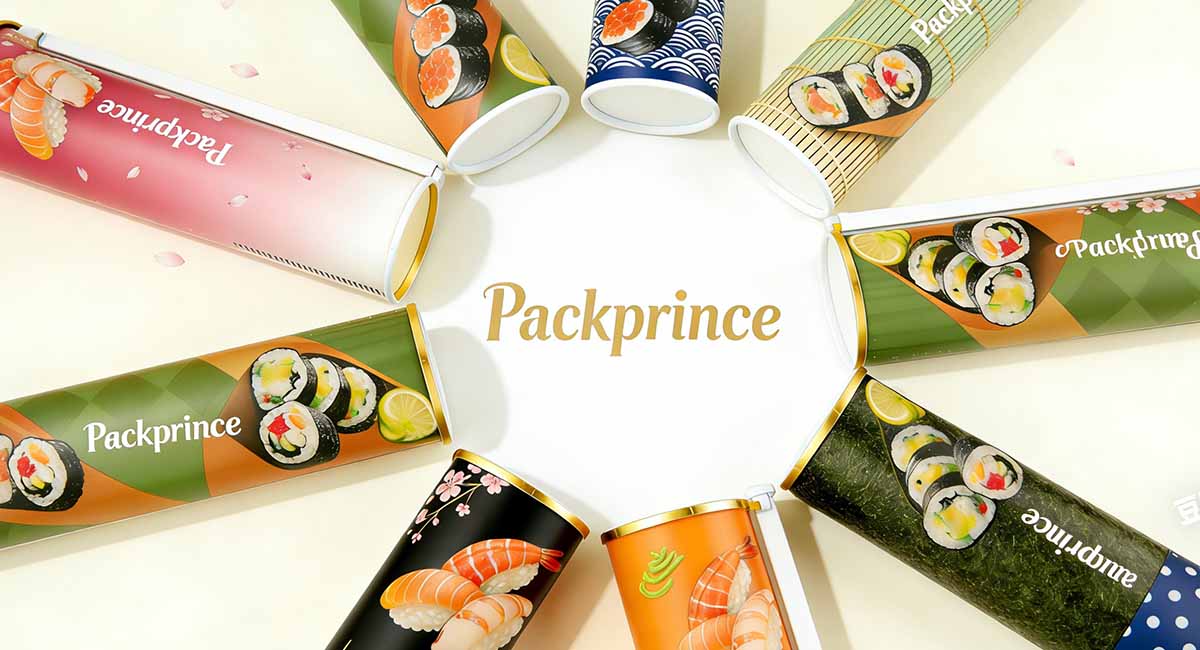
At a basic level, sushi push pop packaging is a cylindrical container that stacks pre-cut sushi pieces vertically. The eater pushes a base upward so each piece rises into reach—creating a clean, interactive eating experience designed for on-the-go consumption and social sharing.
Why it’s attracting customers:
- “Reveal” moment + shareability
The mechanism turns eating into a mini “unboxing,” which performs well on short-form video. - Portability
The tube format is easy to hold while walking, commuting, or browsing a store. - Branding surface
Tubes offer full-wrap print real estate and strong shelf visibility.
Why does it create operator questions:
- Tube packaging can add tolerance and QA complexity (push friction, fit, closures).
- It changes how customers perceive value (portion, pricing, “novelty vs premium”).
So before you pick a channel, you want a quick fit-check.
What needs to be checked before launching push pop sushi?
Use this as a go/no-go screen.
1) Menu fit
Push pop sushi tends to work best when you can standardize:
- roll diameter and cut height
- piece count (consistent stack)
- ingredient moisture (avoid sogginess)
2) Channel fit
Ask: Where does the “interactive” value get rewarded?
- In dine-in, it’s a novelty add-on
- In takeout, it’s convenience + differentiation
- In retail, it’s shelf impact + impulse purchase
3) Operational fit
You need a repeatable workflow:
- portioning + loading time
- cold holding and condensation control
- sauce strategy (how to prevent leaks and mess)
4) Brand fit
If your positioning is premium, your solution must look premium:
- high-quality printing/finishes
- controlled portion size perception
- a clean eating experience (no sticky “cheap gimmick” feel)
If you pass this fit-check, choose the best channel playbook below.
Traditional sushi restaurants
Why it suitable
Traditional restaurants can use push pop sushi as a limited-format signature without replacing core menu items. Because the format is interactive and visually distinctive, it can generate organic content and “try-it” demand even when guests still prefer classic nigiri/maki for the main meal.
How to sell it
- Chef’s special/limited daily drop
Scarcity is the easiest way to avoid operational overload and protect the premium feel. - Add-on positioning
Offer it as a “fun format” alongside core classics rather than a replacement. - First-timer set
Keep the options tight (3–5 best sellers). Viral formats typically sell better when the decision is easy.
What to pay attention to
- Piece size perception
Some viral versions are “large pieces,” which can feel awkward to eat if you don’t match the sizing to the tube and the customer’s expectations. - Brand consistency
If you’re an omakase-forward brand, don’t let the novelty dilute your identity—use premium finishes and restrained design. - Workflow discipline
Assign a station and standardize loading steps; otherwise, the item will spike ticket times.
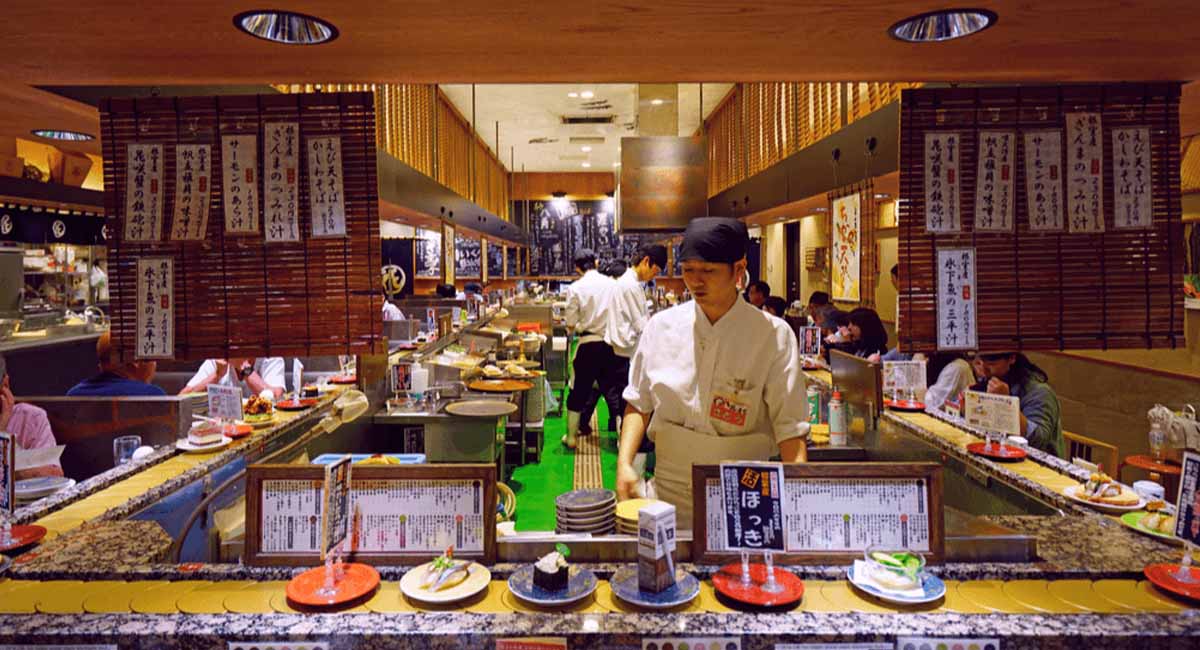
Takeout sushi shops
Why it suitable
Takeout shops win when packaging reduces pain: deforming rolls in transit, messy sauce cups, and weak differentiation in crowded marketplaces. Sushi push pop packaging is designed around clean, portable consumption, making it a natural fit for commuters and office lunch buyers.
How to sell it
- Bundle pricing
“Push Pop + drink” or “Push Pop + side” makes the price easier to accept. - Shelf-ready merchandising
Make it visible at pickup shelves with a clear “how it works” cue (QR code or icon strip). - Social proof marketing
Short videos of the push mechanic are usually more convincing than static photos.
What to pay attention to
- Sauce control
Decide whether you will include a separate sauce tube, an external cup, or no sauce (reduce risk, but may reduce perceived completeness). - Condensation + holding time
Cold sushi + warm delivery bags can create moisture. Use proper liners/materials and avoid long holding windows. - Push performance consistency
If the push is sticky, customers will blame the food, not the packaging.
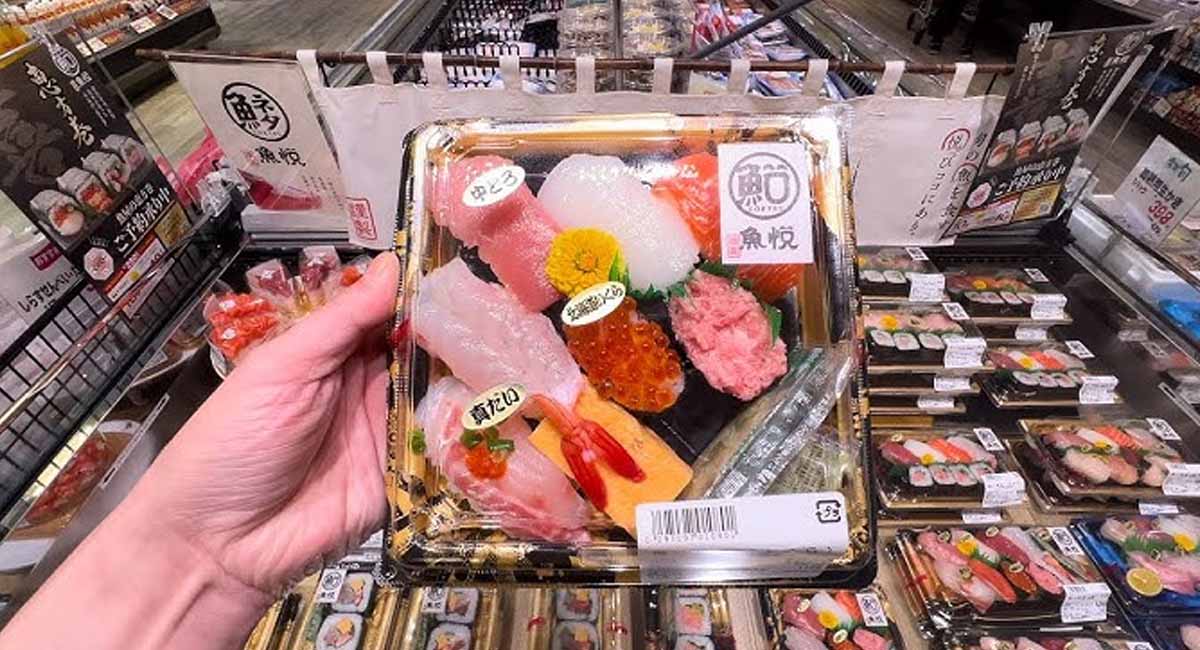
Supermarkets
Why it suitable
In supermarkets, the decision is visual and fast. Push pop sushi stands out immediately because it breaks the usual tray/clamshell pattern, offers a 360° branding surface, and signals a “new product” experience that triggers impulse purchases.
How to sell it
- Position as grab-and-go
Put it near high-traffic prepared foods. - Make the usage obvious
Include clear icons: “Open → Push → Eat.” - Rotate SKUs
Use a consistent base set plus seasonal/limited flavors to keep the shelf fresh.
What to pay attention to
- Labeling and barcode placement
Ensure you don’t block the most valuable branding area. Plan a dedicated label zone. - Tamper evidence expectations
Retail buyers often expect visible tamper evidence. Choose closure solutions accordingly. - Stacking and stability
Tubes roll. Solve for shelf stability with secondary packaging or display fixtures.
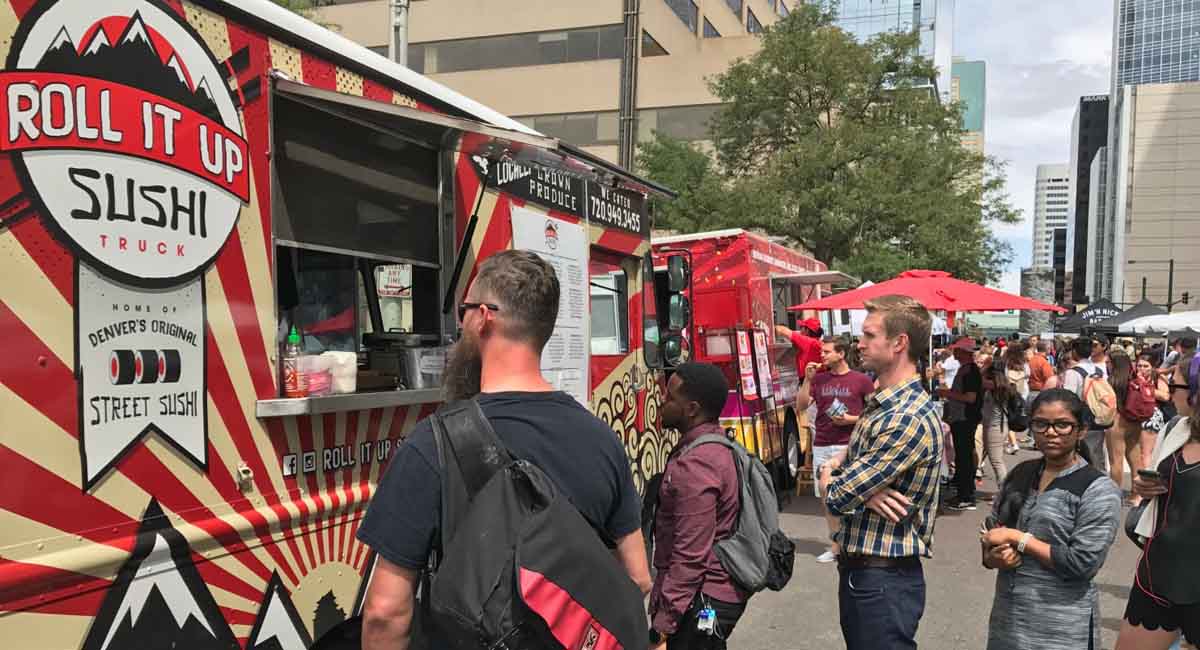
Food truck vendors
Why it suitable
Food trucks succeed when handoff is fast, eating is clean and utensil-light, and the product markets itself while customers walk around. Push pop sushi fits the “street food theater” model and can be sold as a premium portable item.
How to sell it
- Keep the menu tight
3–5 options with predictable loading behavior. - Design a fast build workflow
Pre-portion components; load the tube quickly and consistently. - Price for experience
Customers accept higher prices when the format feels unique and shareable.
What to pay attention to
- Peak-hour stress
If loading takes too long, your line suffers. Pilot with a limited window first. - Temperature management
Trucks require disciplined cold holding. Do not let packaging become a substitute for food safety controls. - Waste control
If you add sauce components, make sure they don’t explode your waste stream.
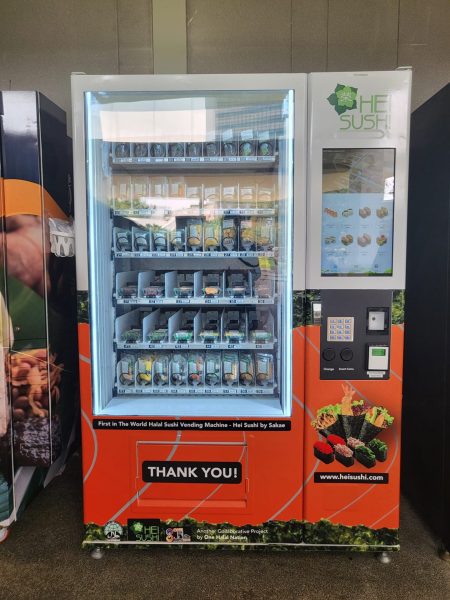
Self-service sushi push pop packaging vending machines
Why it suitable
Vending works when products are single-serve, self-contained, and consistent in shape and weight. Push pop sushi tubes are naturally standardized and communicate “how to eat” with minimal instruction, which supports automation.
How to sell it
- Placement strategy first
Transit hubs, office lobbies, campuses—where “portable + quick” is high value. - Machine-friendly SKU discipline
Fewer SKUs, consistent dimensions, predictable restocking. - Strong on-pack guidance
Simple icons beat long text.
What to pay attention to
- Drop/vibration and rolling
Vending environments require stronger mechanical stability and tested tolerances. - Tamper resistance
Customers must trust it. - Dimension consistency
If your tube dimensions drift, machines jam.
Why choosing the right factory matters (production system + stable delivery)
For operators, the biggest risk is not “can I buy a tube once?” It’s: can I reorder reliably, keep the push performance consistent, and scale volume without QC surprises?
A mature sushi packaging production system typically includes:
Standardized spec library + rapid sampling
- proven diameters/heights for common roll formats
- multiple lid/base options (depending on your channel)
- quick sampling so you can validate push feel and presentation before launch
Mechanical and print QC checkpoints
- push smoothness testing
- closure fit checks
- print consistency across batches
- shipping protection validation
Stable delivery for recurring orders
- capacity planning
- reorder SOP (so you don’t “change specs by accident”)
- stable lead times
Sushi Push Pop Packaging FAQ
Is sushi push pop packaging only for “viral” shops?
No—viral content helps, but the format is also a practical packaging choice for takeout and retail because it’s portable and creates a clear differentiation on shelf and in-hand.
Does push pop sushi work for premium sushi restaurants?
It can, if you position it as a limited-format signature and match the packaging finishes to your brand (premium print, restrained design, consistent push performance).
How do you prevent sauce leaks?
Choose a defined sauce strategy (often a separate component) and validate closure integrity. Many market examples separate condiments from the main tube.
What tube size should I use?
There’s no single “correct” size. Some suppliers list standard examples (e.g., 50 mm × 220 mm), but your best dimensions depend on roll diameter, cut height, and piece count.
Is sushi push pop packaging eco-friendly?
It depends on the material system and local recycling/composting infrastructure. Many versions use a cardboard tube body, but you should confirm liners, coatings, and any plastic components used for functionality.
Can supermarkets use push pop sushi without staff instruction?
Yes—if you make usage obvious with icons and/or a QR demo, plus stable shelving or display fixtures to prevent rolling.
What’s the minimum order for custom sushi push pop packaging?
MOQ varies by structure, printing, and finish. The fastest way is to send your dimensions/volume so the factory can quote a realistic MOQ and sampling plan.
If you’re considering push pop sushi, the fastest path is to validate three things with samples:
- Does the push feel smooth and consistent?
- Does the presentation stay clean after holding time and transport?
- Does the packaging match your brand positioning?
Send the checklist details above and we’ll recommend a production-ready sushi push pop packaging structure, provide samples, and outline stable delivery for recurring orders.