Black Velvet Packaging: Solving Glue Hardening & Dust Risks
Jump to Section:
From high-end jewelry to premium cosmetics, black velvet packaging communicates ultimate luxury. However, from a manufacturing perspective, black velvet is notoriously unforgiving. If produced in a substandard facility, it is highly susceptible to two fatal flaws: glue seepage that hardens the fabric, and electrostatic dust absorption that makes the product look dirty before it is even unboxed.
I. The “Crispy Velvet” Disaster: Glue Seepage Explained
Velvet is a porous, breathable textile. When applying velvet to a rigid paperboard core, standard automated box-making machines apply high-viscosity liquid glue. If the glue coating is too thick, or the pressing machine exerts too much pressure, the liquid adhesive penetrates the velvet fibers.
Once dry, this creates the dreaded “crispy velvet” effect. The fabric loses its signature plush softness and becomes hard, crusty, and visually stained. For a luxury brand, presenting a rigid box with hardened, glued velvet is an immediate disqualifier. Controlling this requires microscopic precision over adhesive viscosity.
II. Electrostatic Dust: The Magnet Effect
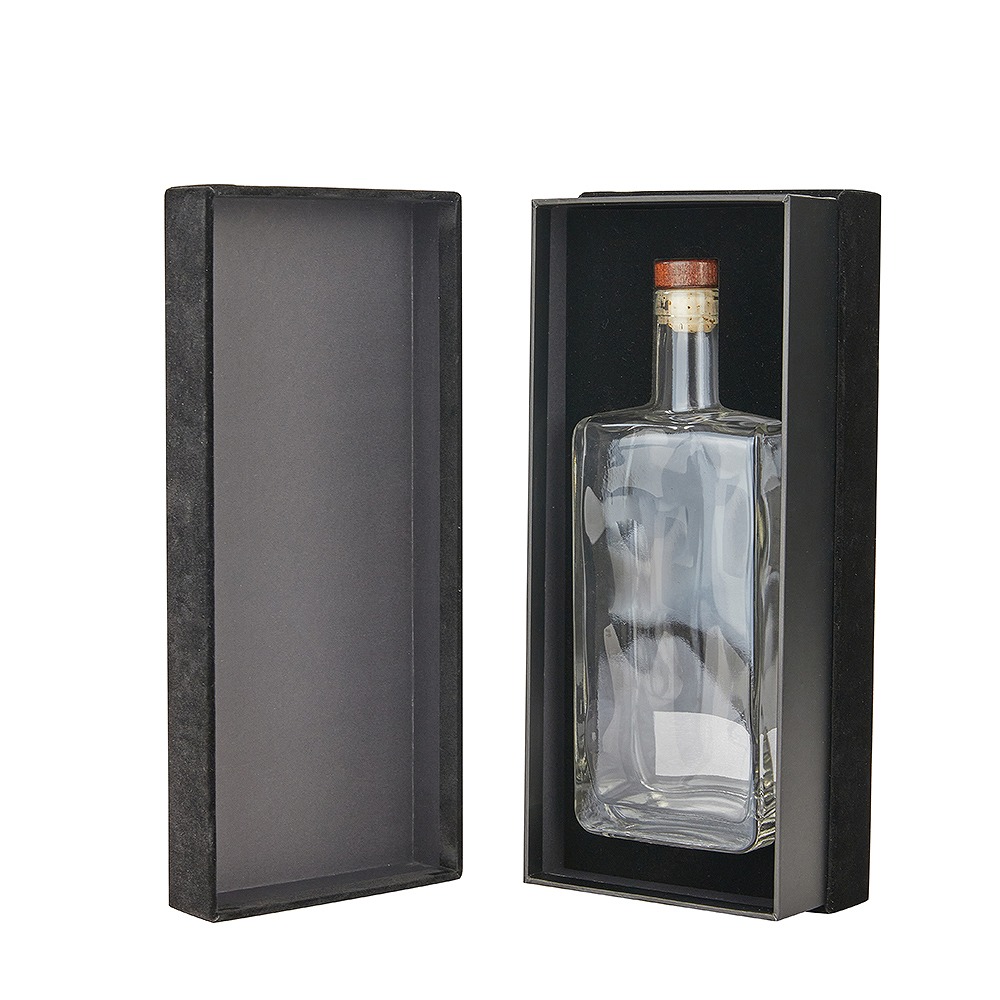
The second major risk of black velvet packaging is its tendency to act as a magnet for factory debris. During the die-cutting of greyboard, microscopic paper dust fills the air. Because velvet fabrics inherently generate static electricity through friction, black velvet will actively attract white paper dust. Attempting to wipe this dust off only creates more friction, pulling the dust deeper into the fibers.
III. PackPrince’s Defect-Free Manufacturing Protocol
While these risks are intimidating, they are entirely preventable through strict environmental controls and material science. To produce flawless black velvet packaging, we implement the following protocols:
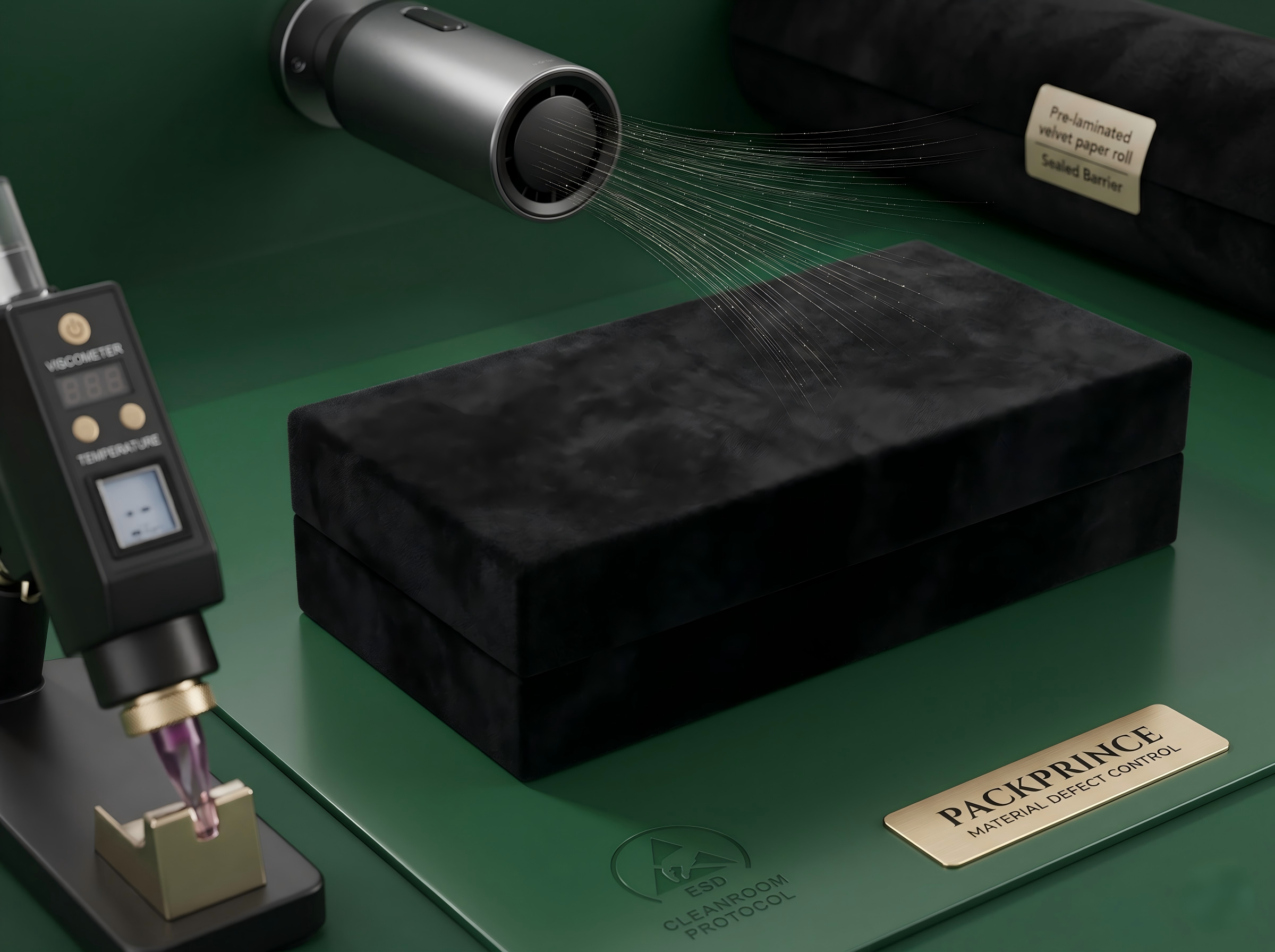
- Viscosity-Controlled Adhesives: We abandon standard liquid glues for velvet. Instead, we use highly calibrated, low-moisture jelly glues applied at specific temperatures. This prevents capillary action, ensuring the glue never breaches the fabric’s surface layer.
- ESD (Electrostatic Discharge) Cleanrooms: Our velvet application lines are physically isolated from the greyboard cutting zones. We utilize ionized air blowers over the production line to neutralize static charges, preventing the velvet from attracting ambient dust.
- Pre-Laminated Stock: Where possible, we utilize pre-laminated velvet paper rather than raw fabric. This provides a sealed barrier between the plush surface and the adhesive layer, guaranteeing zero seepage.

IV. FAQ: Protecting Your Velvet Investment
A: It is likely contaminated by paper dust during manufacturing due to a lack of ESD protocols. Once deeply embedded in the fibers, this dust cannot be effectively removed by rollers.
A: Pre-laminated velvet has a slightly firmer tactile response but offers identical visual plushness and 100% protection against glue seepage, making it the superior choice for rigid box structures.
Demand Flawless Execution
Do not let substandard manufacturing ruin your luxury presentation. Send us your requirements to experience defect-free velvet production.