

Custom Peptide Packaging Boxes for Vials
Custom rigid boxes, drawer boxes, folding cartons and fitted inserts developed around your actual peptide vial dimensions, vial count and brand requirements.
Peptide Packaging Engineered Around Your Actual Vials
Peptide vial packaging should be developed around the actual vial, not a generic box size. We review vial diameter, total height including the closure, vial count and presentation direction before developing the box structure and fitted insert.

Share your vial dimensions, photos, drawings or physical samples. We develop the box structure and insert around the actual product and required presentation.
Vial & Count Review
Confirm vial diameter, total height, closure size, vial count and required orientation.
Structure Development
Select a suitable drawer box, book-style rigid box, magnetic box, lid-and-base box or folding carton.
Insert Engineering
Develop PET, EVA or paperboard cavities for secure fit, clean presentation and practical product removal.
Sample & Production
Check vial fit, opening direction, artwork and finishes on the sample before mass production.
Choose The Right Box Direction, Insert Layout And Structure For Your Vial Count
Different peptide products require different packaging layouts. Some projects need a compact single-vial carton, others need a premium 2-vial drawer box, while multi-vial sets require a more organized tray layout. We develop the structure, insert and presentation direction around the actual vial quantity and intended brand positioning.
- Single vial, 2 vial and multi-vial layouts
- Rigid boxes, cartons and fitted inserts
- PET, EVA and paperboard insert options
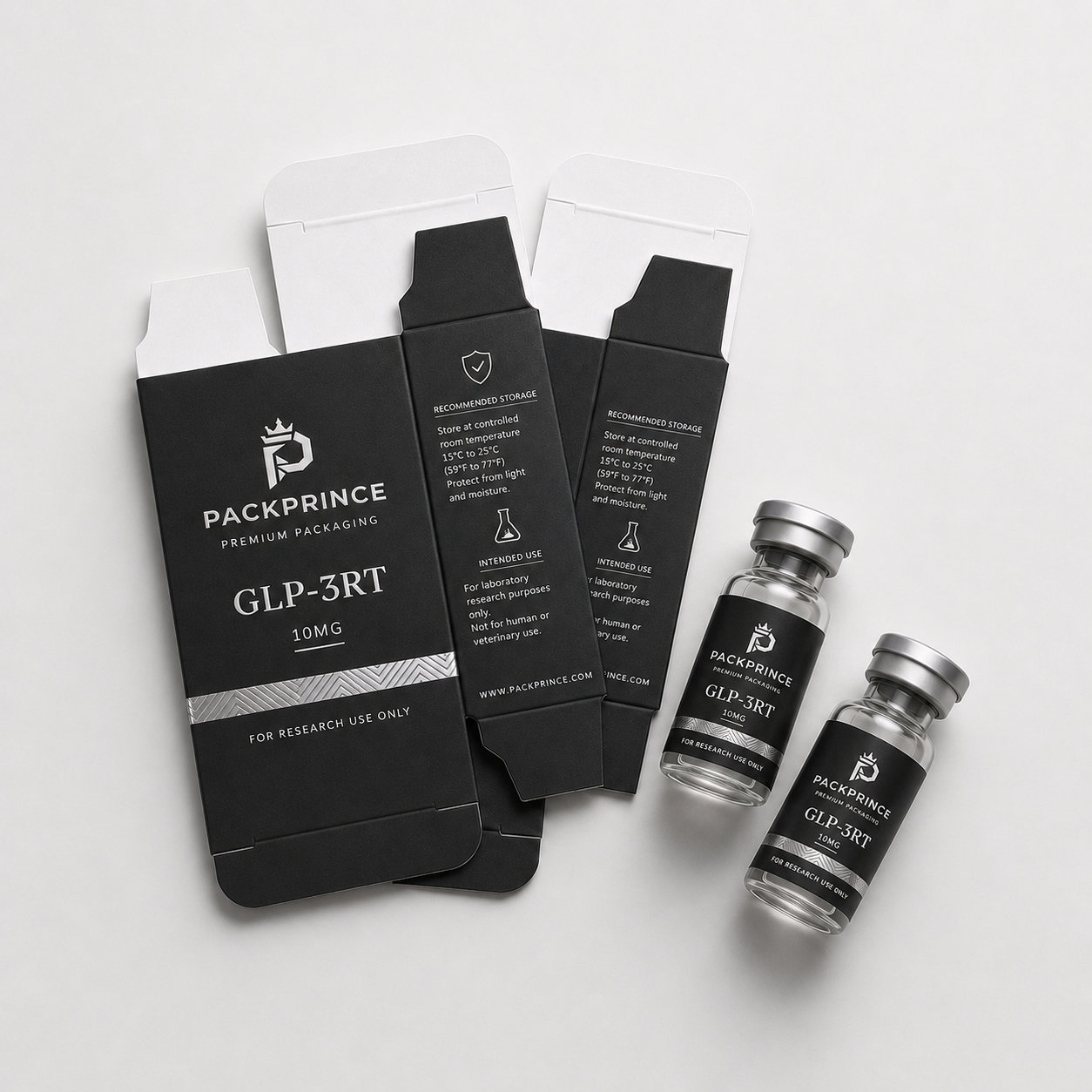
Single Vial Packaging
Suitable for individual retail units, sampling programs and compact branded presentation. This configuration can be developed as a folding carton or a rigid box depending on the protection level and premium effect you need.
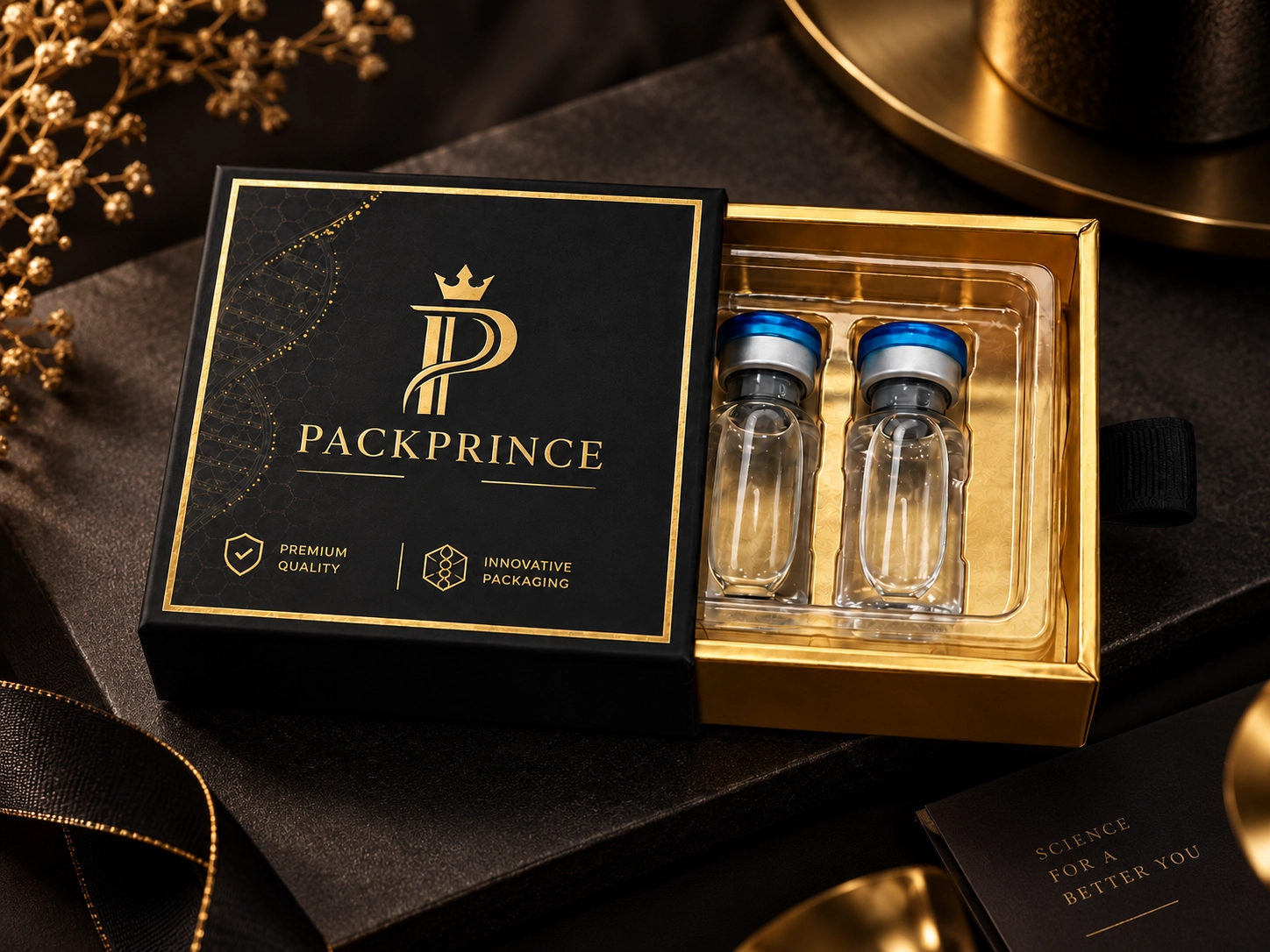
2 Vial Packaging
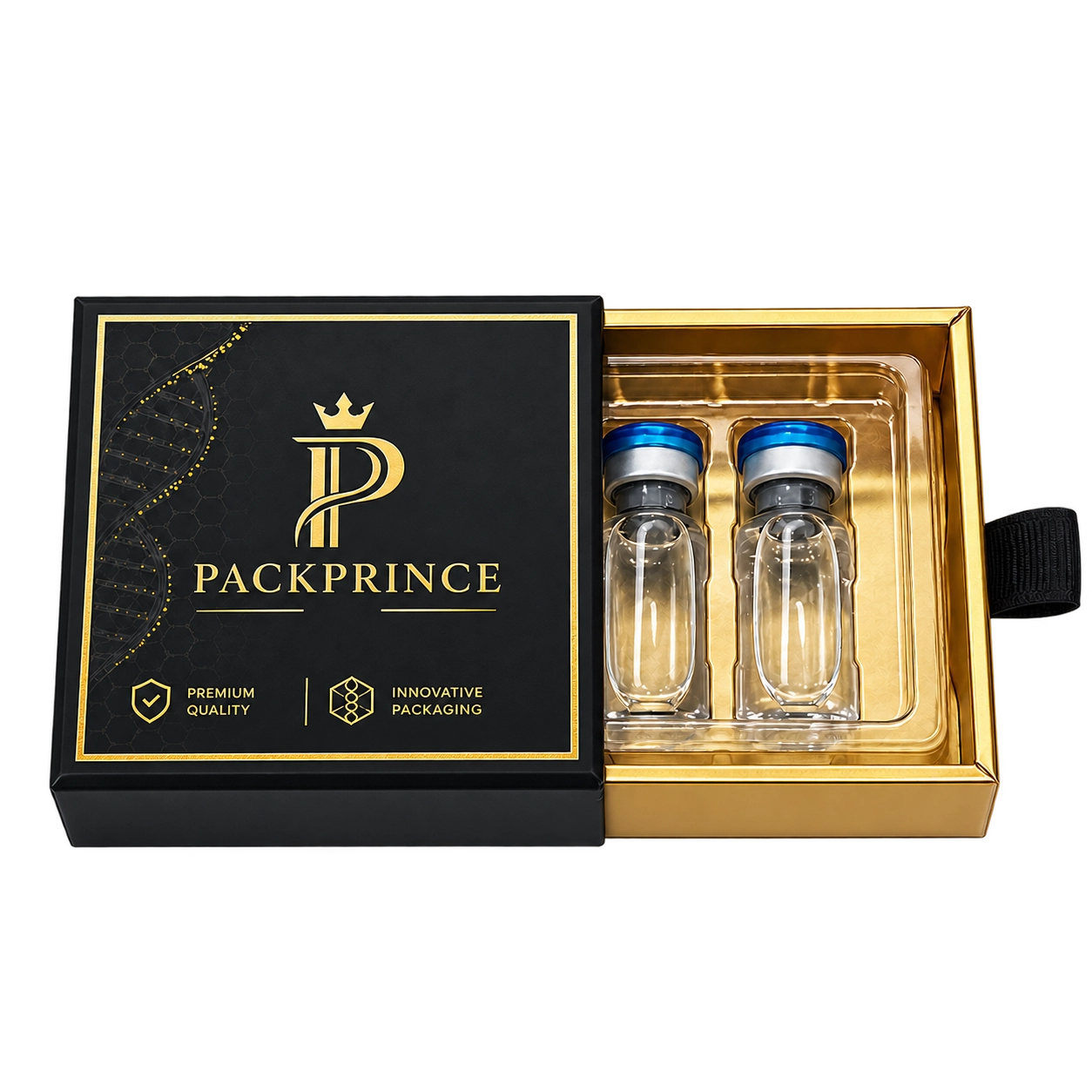
One of the most popular peptide packaging formats. Two-vial boxes work well for paired products, short treatment sets or premium presentation. Drawer boxes, magnetic rigid boxes and book-style boxes are all strong options for this configuration.

Multi-Vial Packaging
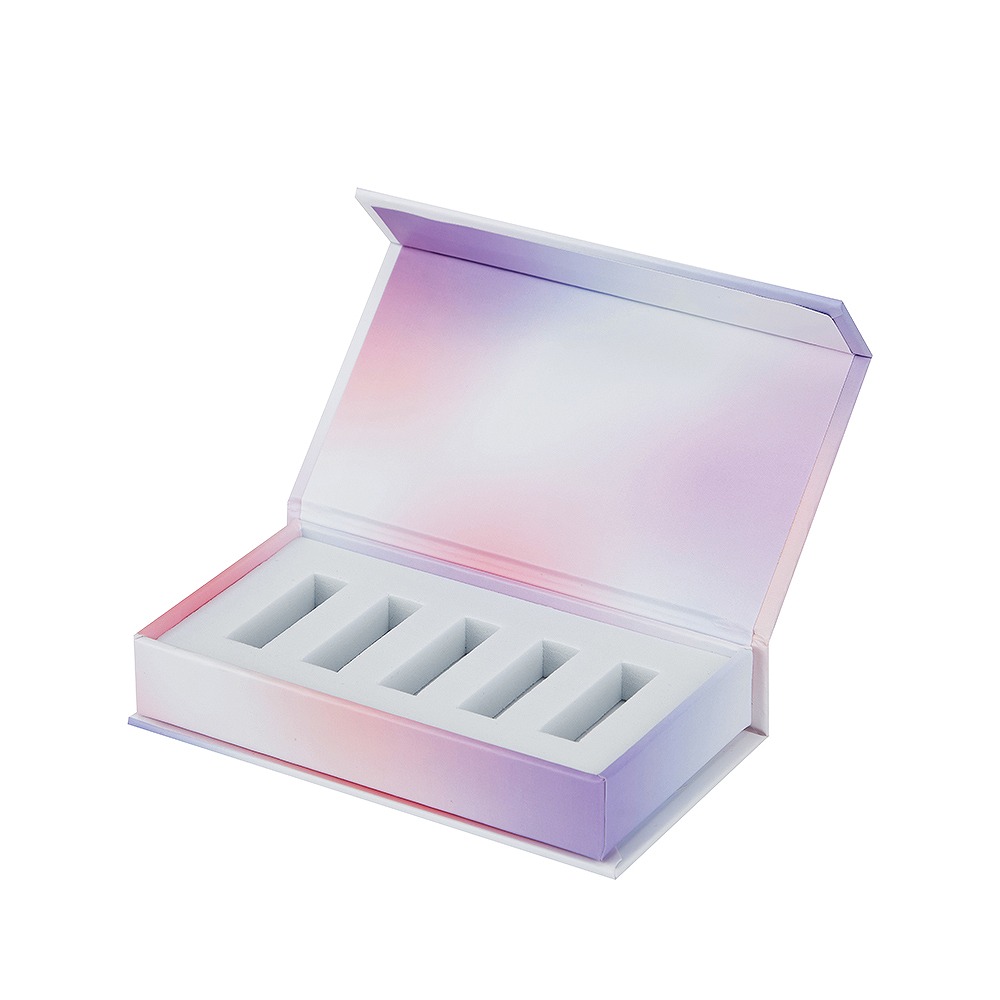
For 4, 5, 6, 10 or other custom vial counts, the internal layout becomes especially important. We organize the cavity spacing, vial access and brand presentation to keep the set neat, protective and easy to use.
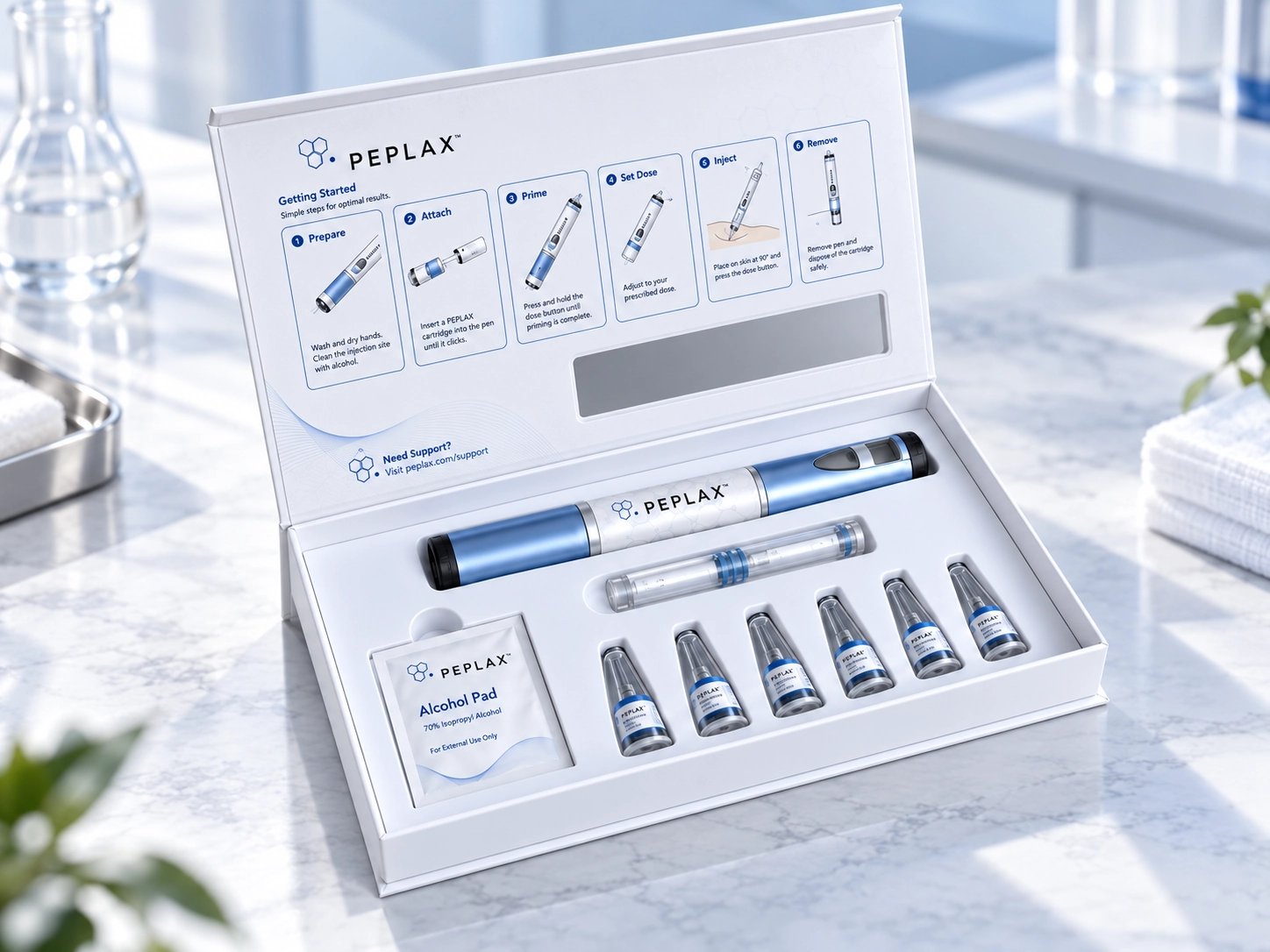
Vial Kit Packaging
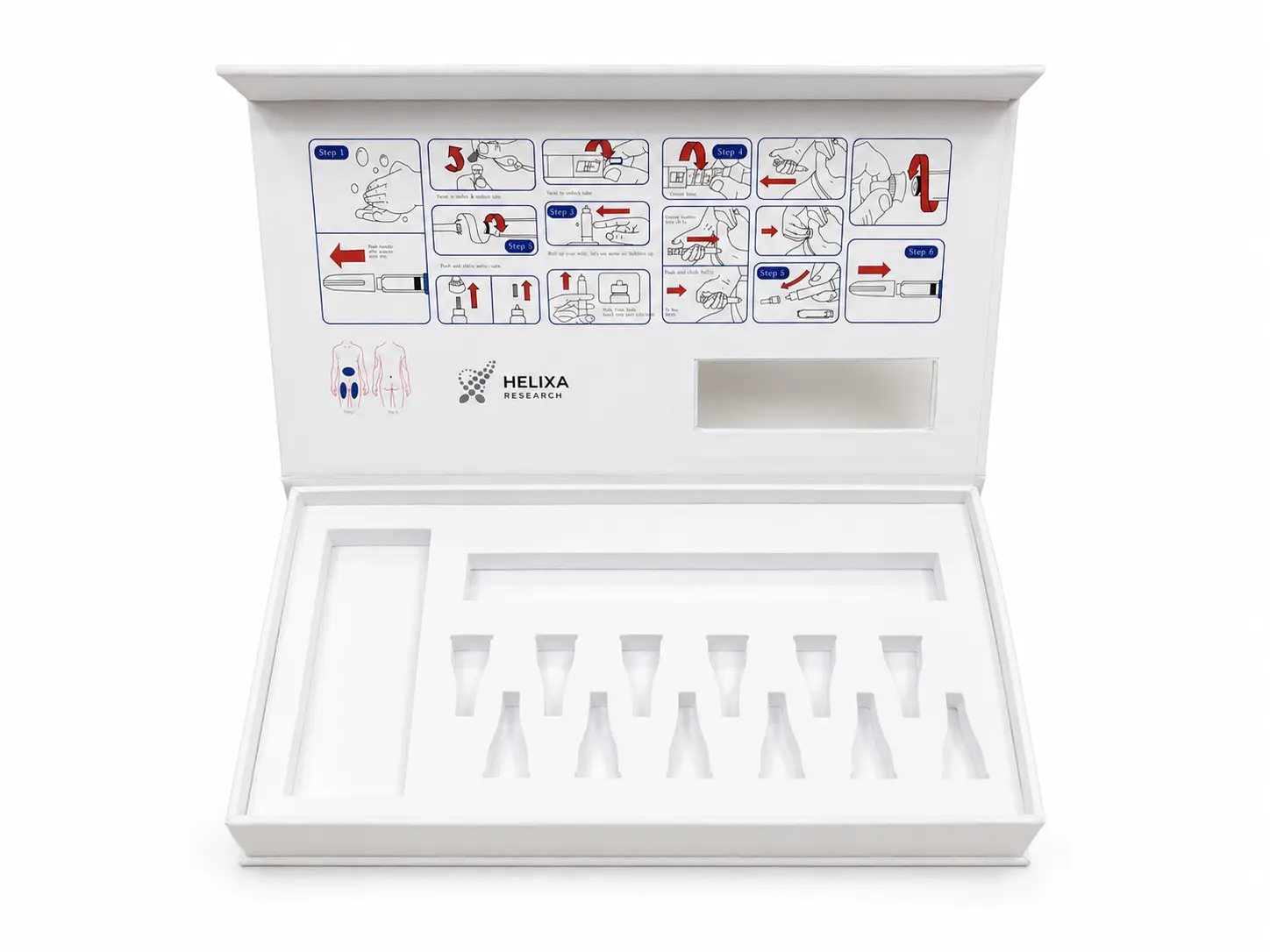
Some projects include more than vials alone. If you need space for leaflets, accessory parts or a more gift-style presentation, we can expand the insert and box layout while keeping the product presentation clean and organized.
Lower-Cost Box + Paper Insert Solution
If your project is more cost-sensitive, we can also develop a paperboard box with a paper insert. This structure can still provide organized vial presentation while keeping material cost lower than premium rigid box options. However, this type of assembled structure is not designed for flat shipping.

Find The Right Structure For Your Peptide Packaging
Different box structures create different balances between presentation, protection, packing efficiency and cost. Compare the main options below after confirming your vial count and insert layout.
Folding Carton
A lightweight printed paperboard format for single-vial and compact multi-vial packaging. It can be paired with clear PET blister trays or die-cut paperboard inserts and is suitable when efficient packing and shipping are important.
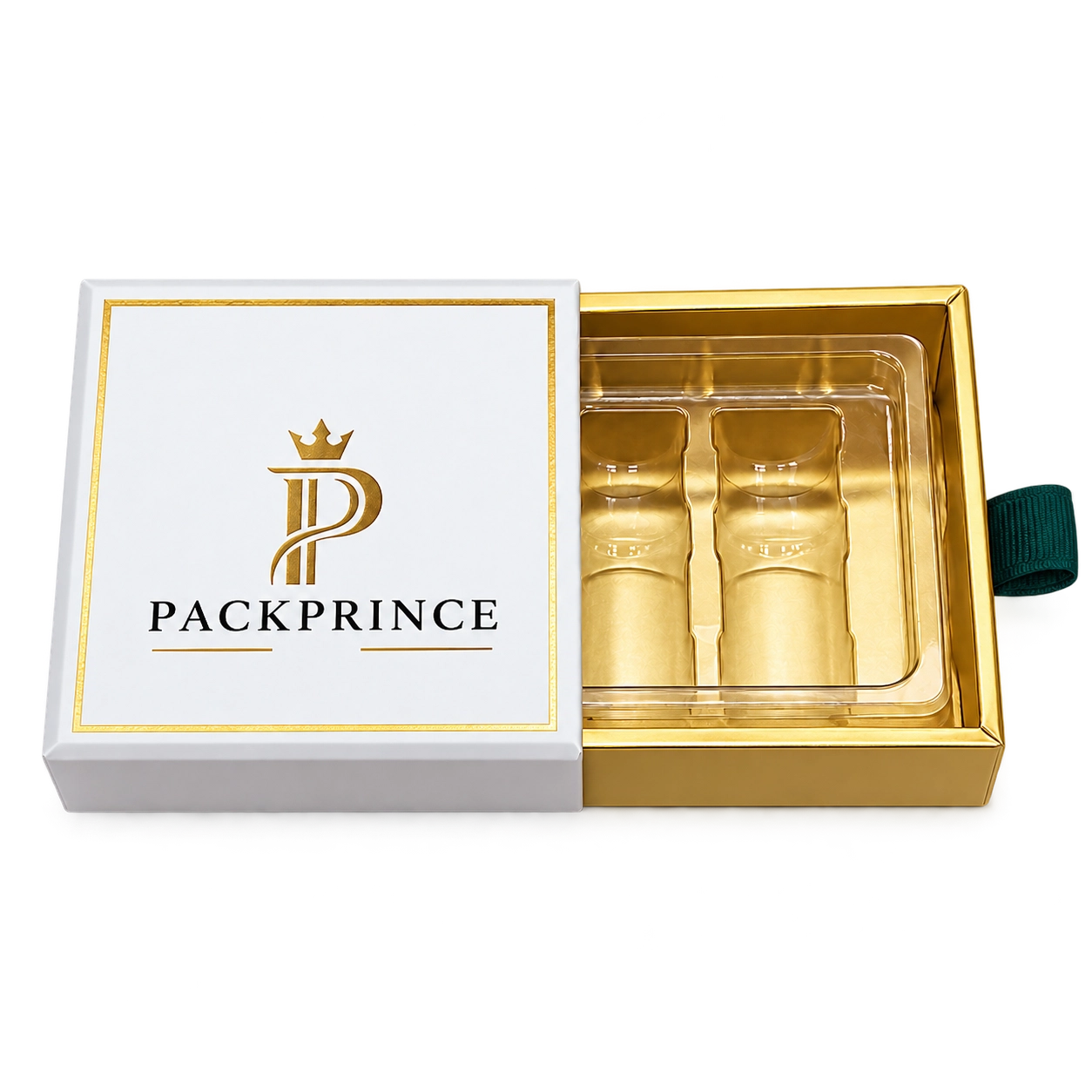
Rigid Drawer Box
A premium rigid structure with a controlled slide-open reveal. It works particularly well for 2-vial sets and can be combined with a clear PET tray, EVA insert and ribbon pull.
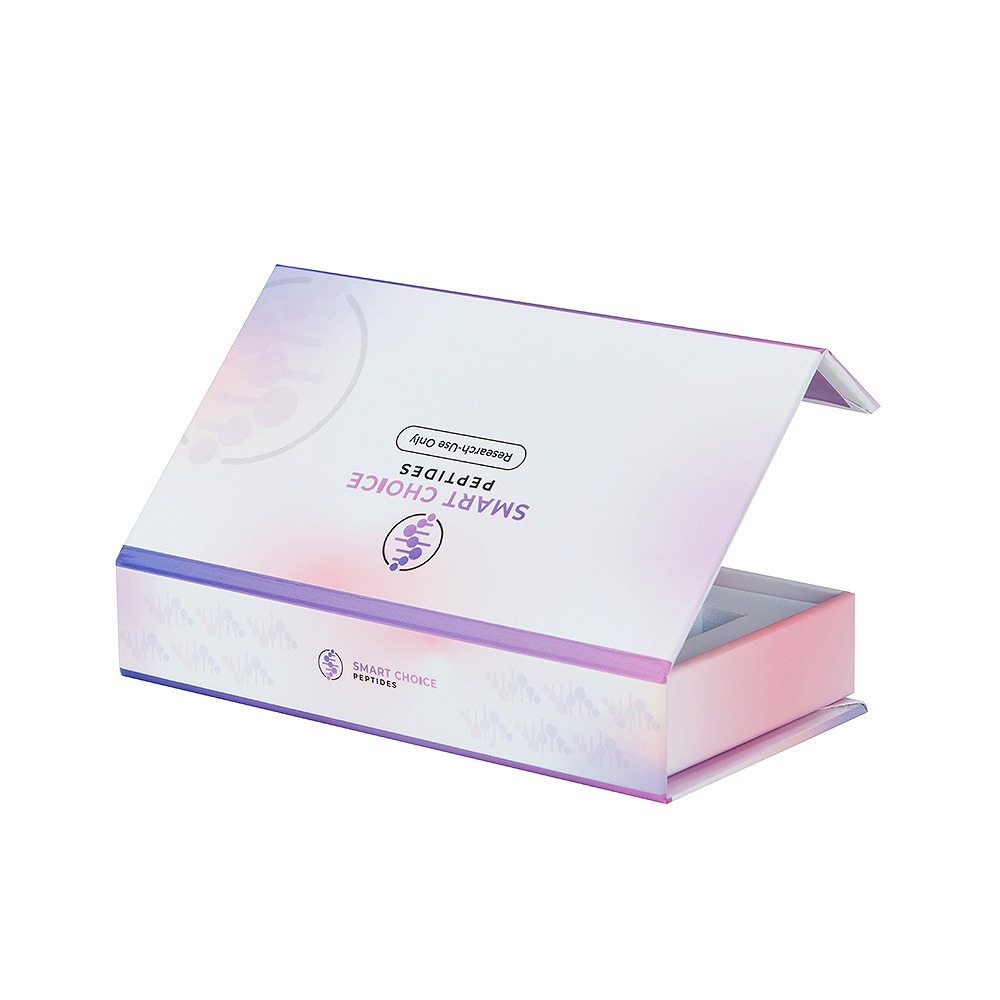
Book-Style & Magnetic Box
A hinged rigid structure that provides a large branding surface and controlled opening. Hidden magnets can be added when a more refined closure and premium presentation are required.

Lid & Base Rigid Box
A classic two-piece rigid structure with a wide top opening. It gives the complete insert good visibility and works well for organized multi-vial layouts.

Double-Door Presentation Box
Two opening panels create additional branding space and a more dramatic reveal. This format is better suited to larger kits and campaign presentation than simple single-vial retail packaging.
Paperboard Drawer-Style Box
A lighter paperboard drawer construction with a paper insert. It offers a cleaner presentation than a simple carton while keeping material cost below premium rigid drawer structures.
Measure The Actual Vial Before Developing The Insert
A vial described as 2 mL, 3 mL, 5 mL or 10 mL does not automatically define its exact external size. For a secure insert fit, we recommend confirming the actual vial diameter, total height including the closure, closure diameter and final vial count before structural development.
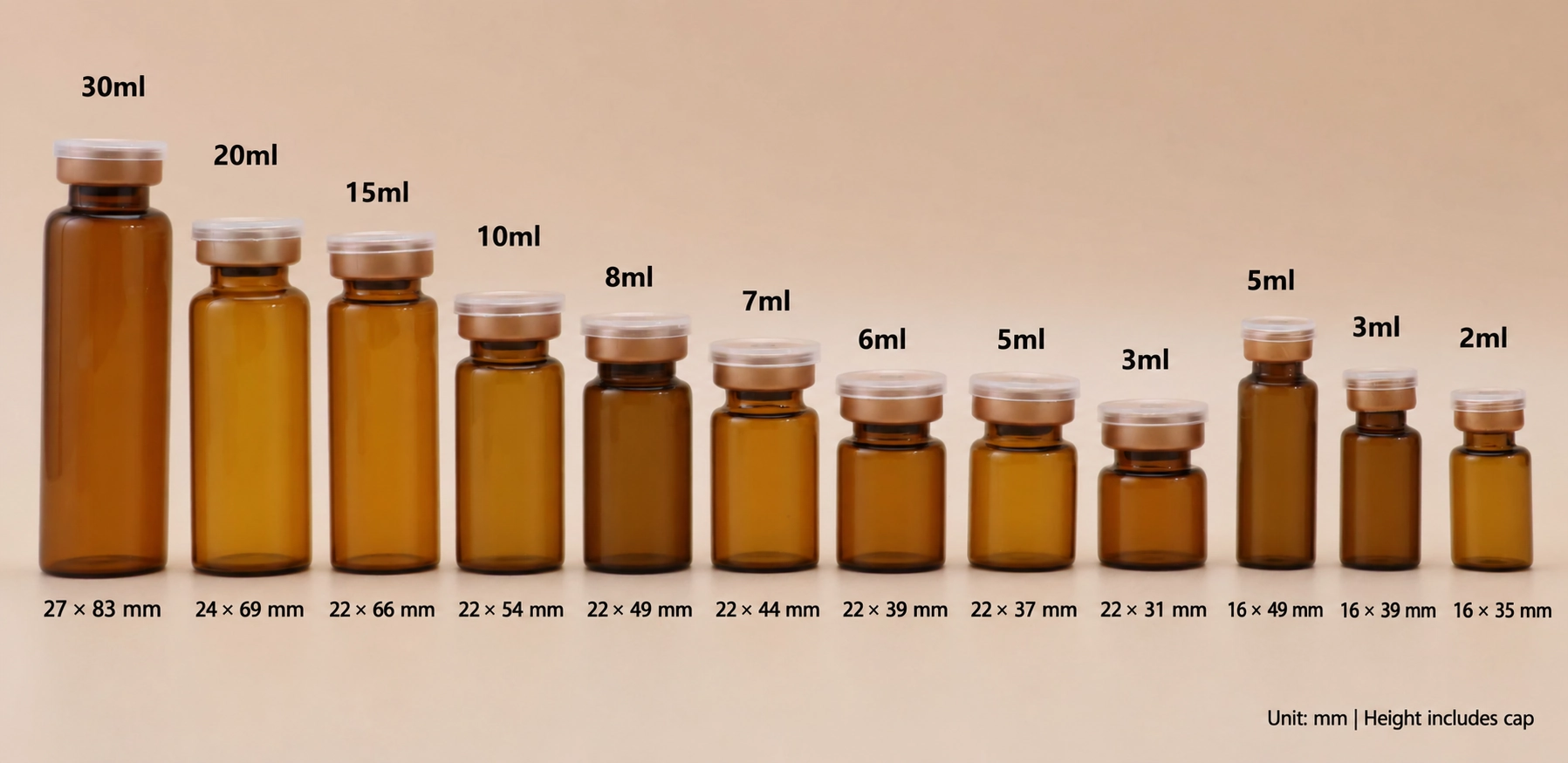
Vial Body Diameter
Measure the widest part of the glass body that will sit inside the insert cavity.
Total Height Including Closure
Measure from the bottom of the vial to the highest point of the cap or closure.
Closure Diameter
Confirm the cap width when it is wider than the vial body or affects top clearance.
Vial Count & Orientation
Tell us how many vials go into each box and how they should be presented inside the insert.
Compare Insert Materials By Protection, Feel And Presentation
The insert is not only a protective component. It also changes how the vial is presented, how firmly it is held, how the customer removes it and how the entire package feels when opened. We develop each insert around the actual vial dimensions, box structure and intended brand direction.
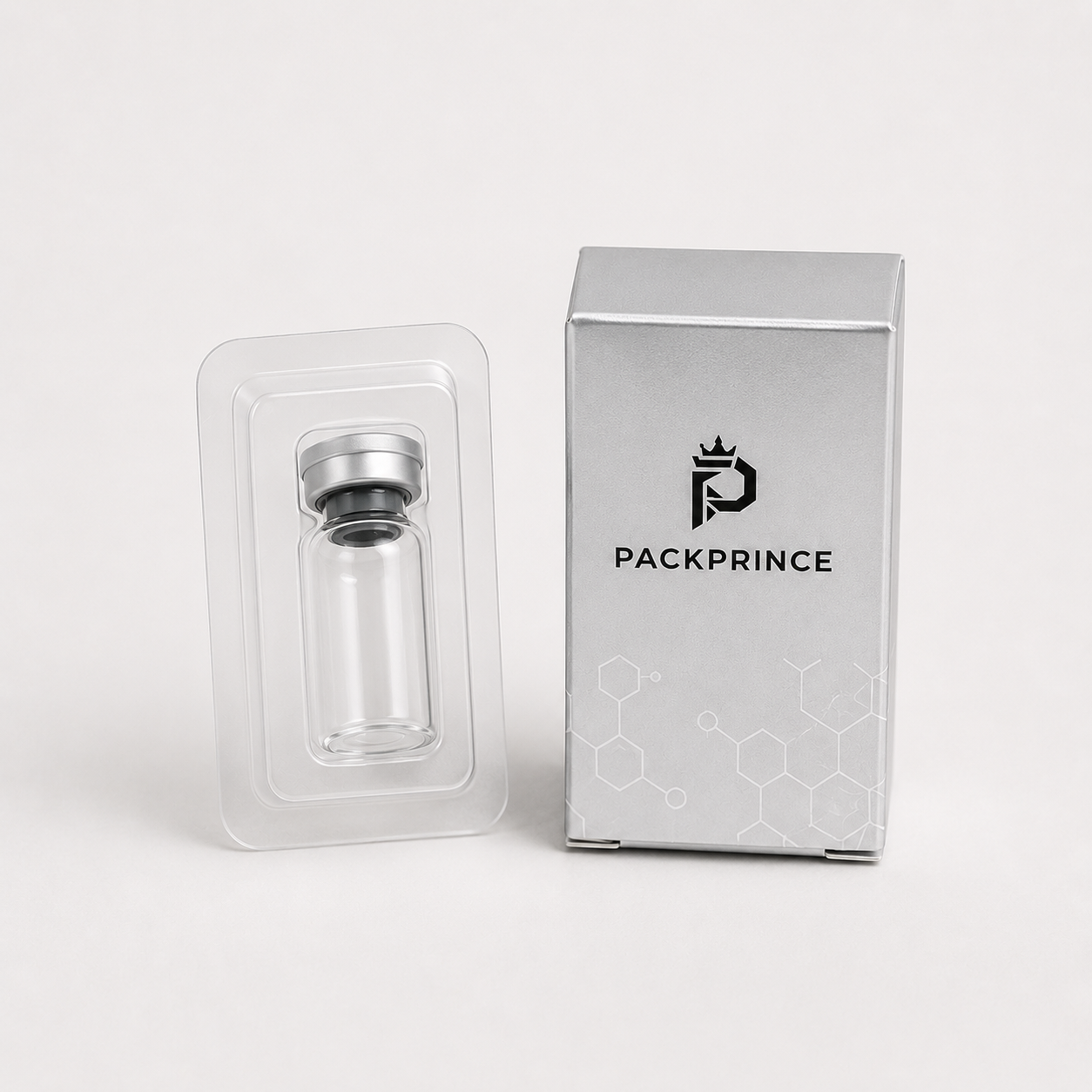 01
Transparent Tray
01
Transparent Tray
Clear PET Blister
Clean product visibility with repeatable thermoformed vial cavities.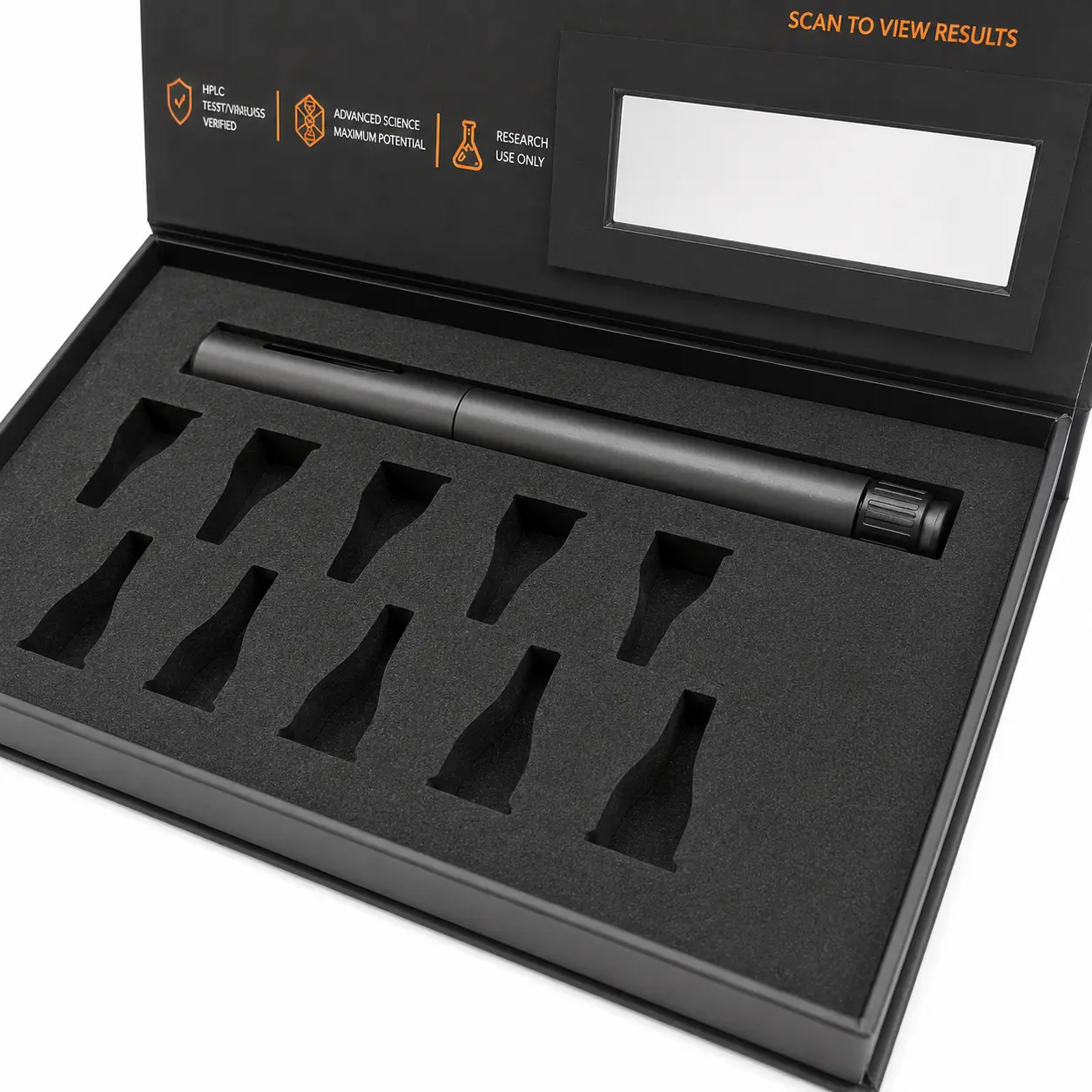 02
Precision Foam
02
Precision Foam
EVA Foam Insert
Firm holding force and a clean premium appearance.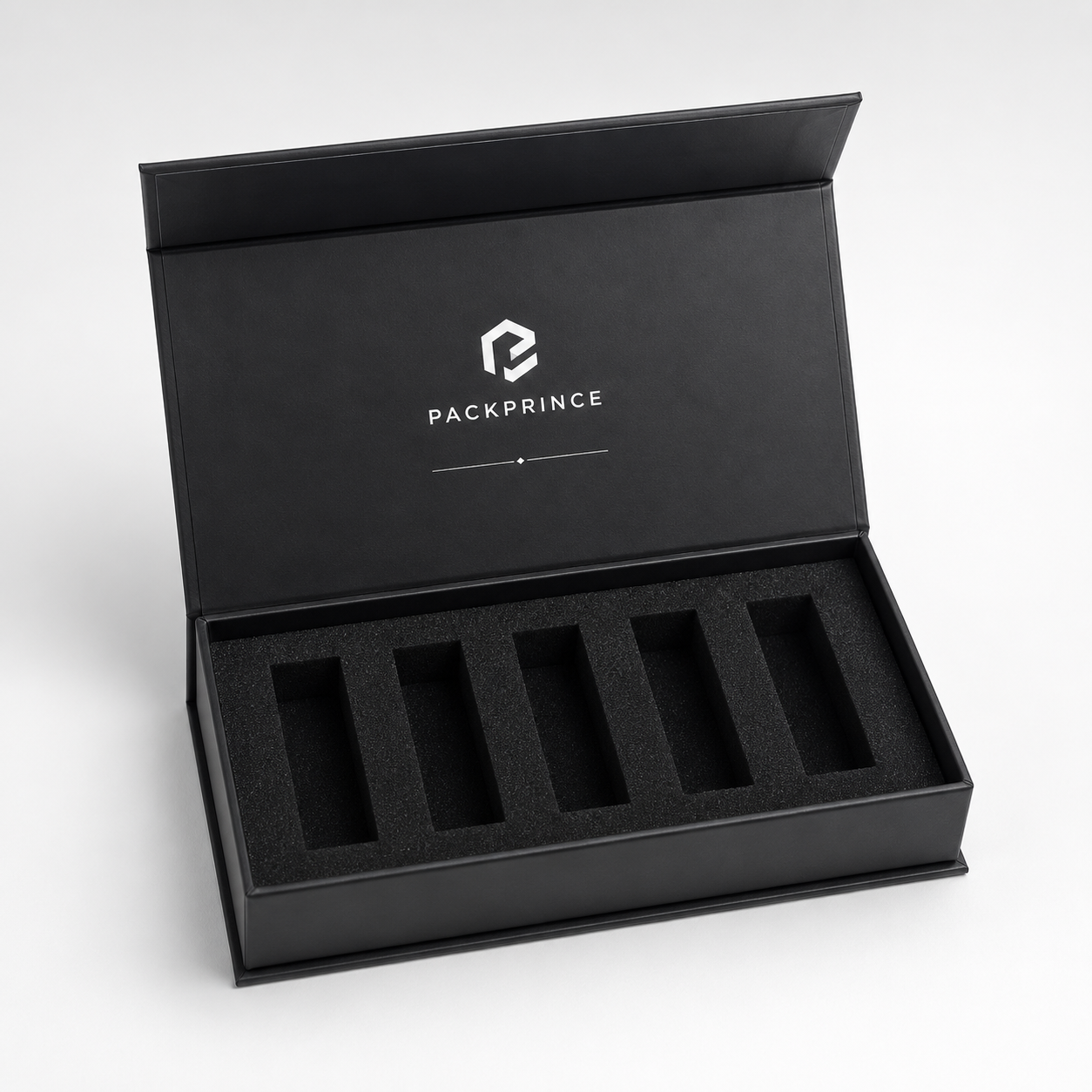 03
Soft Foam
03
Soft Foam
Black Sponge Insert
Softer cushioning with strong dark contrast for luxury presentation. 04
Luxury Surface
04
Luxury Surface
Velvet-Wrapped EVA
EVA structure with a softer textile surface for a more refined interior. 05
Paper-Based
05
Paper-Based
Paperboard Insert
Die-cut paper structure coordinated with cartons or paper-based packaging. 06
Molded Fiber
06
Molded Fiber
Molded Pulp Tray
Molded fiber cavities for projects that prefer a more paper-oriented material direction.Final insert development should also consider vial diameter, closure size, vial count, removal direction, box structure and the final assembly process.
Materials and Finishes for Custom Peptide Packaging
Compare paper stocks, coatings, laminations, printing methods and specialty finishes for peptide vial boxes. Final specifications should be confirmed according to the box structure, insert material, artwork, order quantity and approved sample.
What Should Be Confirmed Before Finalizing Peptide Box Materials and Finishes?
Material and finishing choices should work with the complete peptide packaging structure. Board, print, surface treatment and decoration should remain compatible with the box type, insert, artwork and packing method.
Box Structure & Board
Folding cartons, wrapped rigid boxes and drawer structures require different paper weights, board thicknesses, wrapping directions, crease allowances and assembly methods.
Artwork and Registration
Foil, embossing, spot UV and printed graphics need suitable spacing, line thickness and production tolerances for stable registration on the selected box material.
Handling & Surface Protection
Dark colors, metallic details and soft-touch films may show fingerprints, abrasion or scratching more easily, so packing and shipment protection should be considered.
Quantity & Cost Efficiency
Printing plates, foil dies, embossing tools and specialty papers affect setup costs. Finishing choices should be reviewed together with the target quantity and brand positioning.
Material and Finish Directions for Peptide Packaging
These combinations provide practical starting points for peptide vial packaging. Final paper, brand color, coating and finishing details should be confirmed through artwork review and sampling.
Clean Peptide Vial Packaging
A controlled white or pale-color base with clean typography, restrained brand colors and selective metallic details. This direction works well for single-vial cartons, multi-vial sets and peptide brands seeking a precise, professional appearance.
Premium Peptide Presentation
Textured or soft-touch surfaces combined with controlled metallic details and dimensional branding. Suitable for rigid peptide boxes, launch kits and higher-value presentation packaging where the unboxing experience is more important.
Folding Carton + Insert Direction
A practical printed folding carton combined with PET blister or die-cut paperboard inserts. Suitable for single-vial and compact multi-vial peptide packaging where storage, packing and shipping efficiency are important.
Reduce Unnecessary Material Around the Actual Vial Layout
Responsible material choices should begin with actual vial dimensions and required protection. Box size, insert construction, coatings and shipment volume should be reviewed together rather than in isolation.
Explore Peptide Box Structures We Have Produced
Review real peptide packaging references featuring folding cartons, drawer boxes, book-style rigid boxes, multi-vial layouts and fitted insert solutions. Use these projects to identify the structure, presentation and finish direction closest to your own requirements.
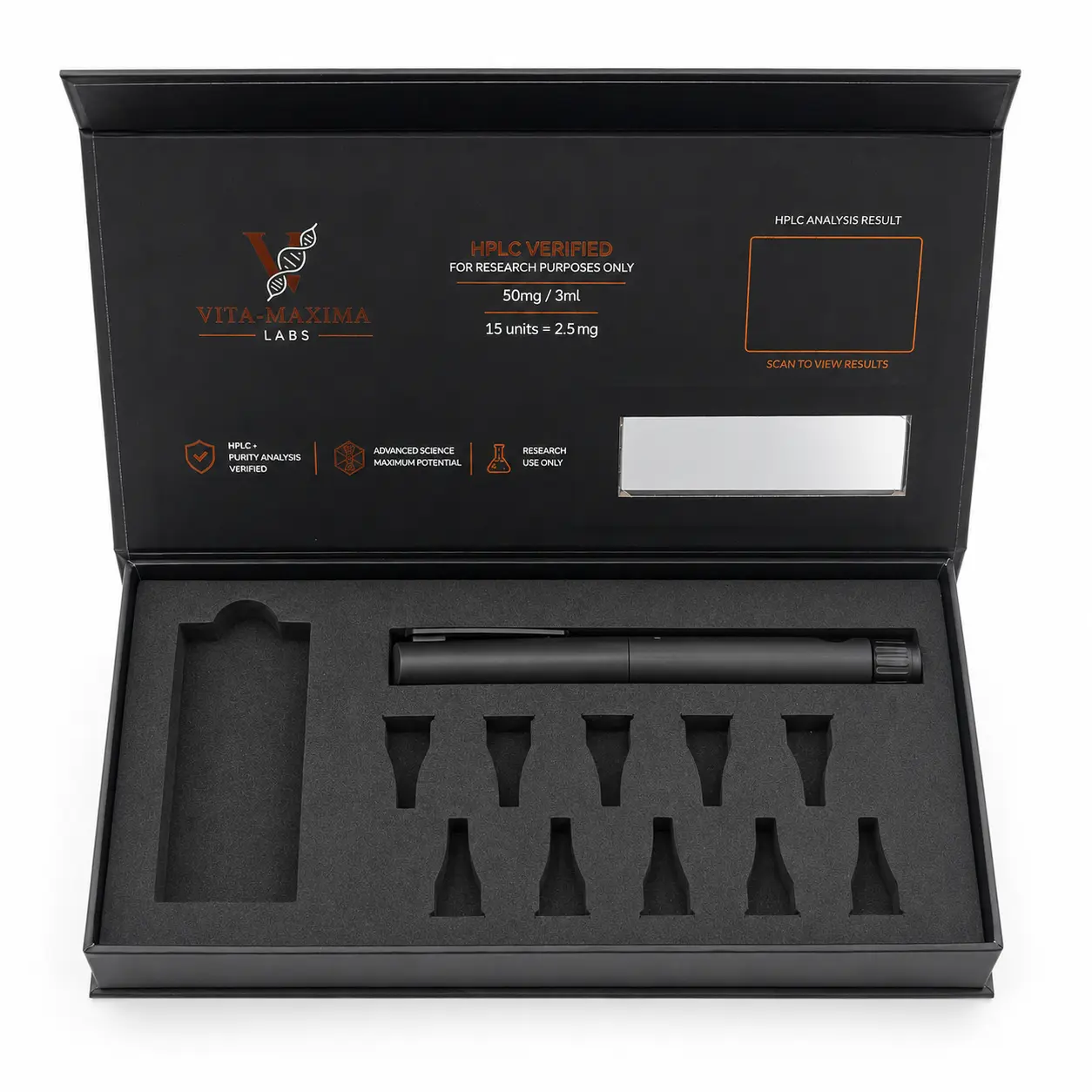
Review the Details That Affect Fit, Appearance and Assembly
For peptide vial packaging, quality review should focus on vial fit, insert position, opening function, print accuracy and shipment protection. The approved sample and agreed specification remain the primary production references.
Vial Fit & Insert Position
Check vial diameter and total height against the finished cavity, including closure clearance, removal space and unwanted movement.
Printing & Brand Color
Review artwork position, text clarity, Pantone or CMYK references, registration and visible color consistency.
Foil, UV & Embossing
Check process position, coverage, edge quality and registration against the approved sample or finishing reference.
Assembly & Shipment Protection
Review opening function, insert stability, ribbons or magnets, surface condition and protective shipment packing.
One Workflow From Vial Review to Shipment Packing
Packprince coordinates peptide packaging from vial and structural review through sampling, printing, insert production, box assembly, inspection and shipment packing.

Request a Quote for Custom Peptide Vial Packaging
A clear brief helps us review the box structure, insert, printing, quantity and delivery requirements more accurately. You do not need every technical detail before contacting us.
Vial Information
- Nominal vial capacity and actual supplier or vial type
- Vial body diameter and total height including closure
- Closure diameter when wider than the vial body
- Number of vials required inside each box
- Preferred vial orientation and removal direction
- Physical samples or dimensional drawings when available
Packaging Requirements
- Preferred box style or Packprince reference project
- Folding carton, drawer, book-style, lid-and-base or other structure
- PET, EVA, sponge, paperboard or molded-pulp insert direction
- Any leaflets, cards or accessories packed with the vials
- Preferred opening and vial presentation direction
- Any retail, storage or shipment-size restrictions
Artwork and Finishes
- Logo files, artwork or preliminary design references
- Brand colors or Pantone references
- Exterior and interior printing requirements
- Matte, soft-touch or anti-scratch surface direction
- Foil, embossing, debossing or spot UV
- Specialty paper or other tactile surface references
Order and Delivery Details
- Estimated order quantity per size or design
- Whether a physical sample is required first
- Target completion or delivery date
- Destination country and postal code
- Preferred shipping method if already known
- Any special outer-carton or shipment requirements
Share your vial dimensions, vial count, target quantity, delivery destination and a reference image. We will review the box structure, insert direction and the next sampling details required.
Questions About Custom Peptide Vial Packaging
Find answers about vial sizing, custom box structures, fitted inserts, samples, order quantities, artwork and secondary peptide packaging development.
01 Can you make custom boxes for 3 mL and 10 mL peptide vials?
Yes. We can develop packaging for common 3 mL, 10 mL and other vial formats, but nominal capacity alone is not enough for insert development. Please provide the actual vial body diameter, total height with closure and closure diameter. See the vial measurement guide.
02 What box styles are available for peptide vial packaging?
Options include folding cartons, rigid drawer boxes, magnetic book-style boxes, lid-and-base boxes and other custom presentation structures. The best direction depends on vial count, insert material, budget and presentation requirements. Compare peptide box structures.
03 Can the insert be customized to the exact vial dimensions?
Yes. PET blister, EVA, velvet-wrapped EVA, sponge, paperboard and molded-pulp inserts can be developed around specific vial dimensions and layouts. Physical vials or accurate dimensional drawings are recommended for final fit testing. Compare insert materials.
04 What is the MOQ for custom peptide vial packaging boxes?
The typical MOQ for most custom peptide box projects is 500 pcs. Some insert types, tooling requirements or special structures may have different production minimums, so the final quantity should be confirmed with the chosen box and insert specification.
05 How long does a peptide packaging sample and mass production take?
A custom sample typically takes about 5–7 days after the structure and artwork direction are confirmed. Mass production is typically around 30–35 days after order confirmation, depending on the box structure, insert, finishes and production schedule.
06 Can you make a sample before mass production?
Yes. Sampling can be used to review vial fit, cavity depth, opening function, vial orientation, paper direction, artwork position and selected finishes before mass production begins.
07 What information do you need to quote a custom peptide box?
Please provide the vial dimensions, vial count, preferred box style or reference image, target quantity and delivery destination. Artwork and insert preferences are helpful but are not required for the first review. See the quote checklist.
08 Is this sterile or direct-contact pharmaceutical packaging?
No. This page focuses on paper-based secondary packaging, retail cartons and presentation boxes for peptide vials. Sterile barrier systems and direct-contact primary pharmaceutical packaging require separate specialist evaluation.
The boxes shown here are secondary, presentation or retail packaging examples. The product owner remains responsible for applicable labeling, transport and regulatory requirements.
Send the vial dimensions, vial count, target quantity and a reference image. We can review the structure, insert and sampling direction around your actual products.