Greyboard Thickness Guide: 1.5mm, 2.5mm, & 3mm Real-World Differences
Jump to Section:
Greyboard Thickness Guide for Custom Rigid Boxes
Choosing the right greyboard thickness is one of the most important structural decisions in premium rigid box manufacturing. A box that is too thin may deform during storage or shipping, while an overly thick board can increase cost, weight, and bulk without improving the customer experience. This greyboard thickness guide explains how brands can select 1.5mm, 2mm, 2.5mm, or 3mm greyboard based on product weight, box size, insert design, logistics requirements, and brand positioning.
1. Why Greyboard Thickness Matters for Premium Packaging
In the luxury packaging industry, greyboard is the hidden structure behind the box. Customers may not see it directly, but they can feel its impact through the box weight, edge strength, lid movement, opening experience, and overall perceived value. For custom rigid boxes, the right board thickness helps the packaging maintain its shape during assembly, storage, display, and international transportation.
A common mistake is assuming that a thicker board is always better. In reality, thickness should match the product and the box structure. A small jewelry box may look bulky if it uses 3mm greyboard. A large whisky gift box may feel weak if it uses only 1.5mm board. A professional greyboard thickness guide should therefore consider strength, cost, design proportion, wrapping difficulty, insert support, and shipping efficiency together.
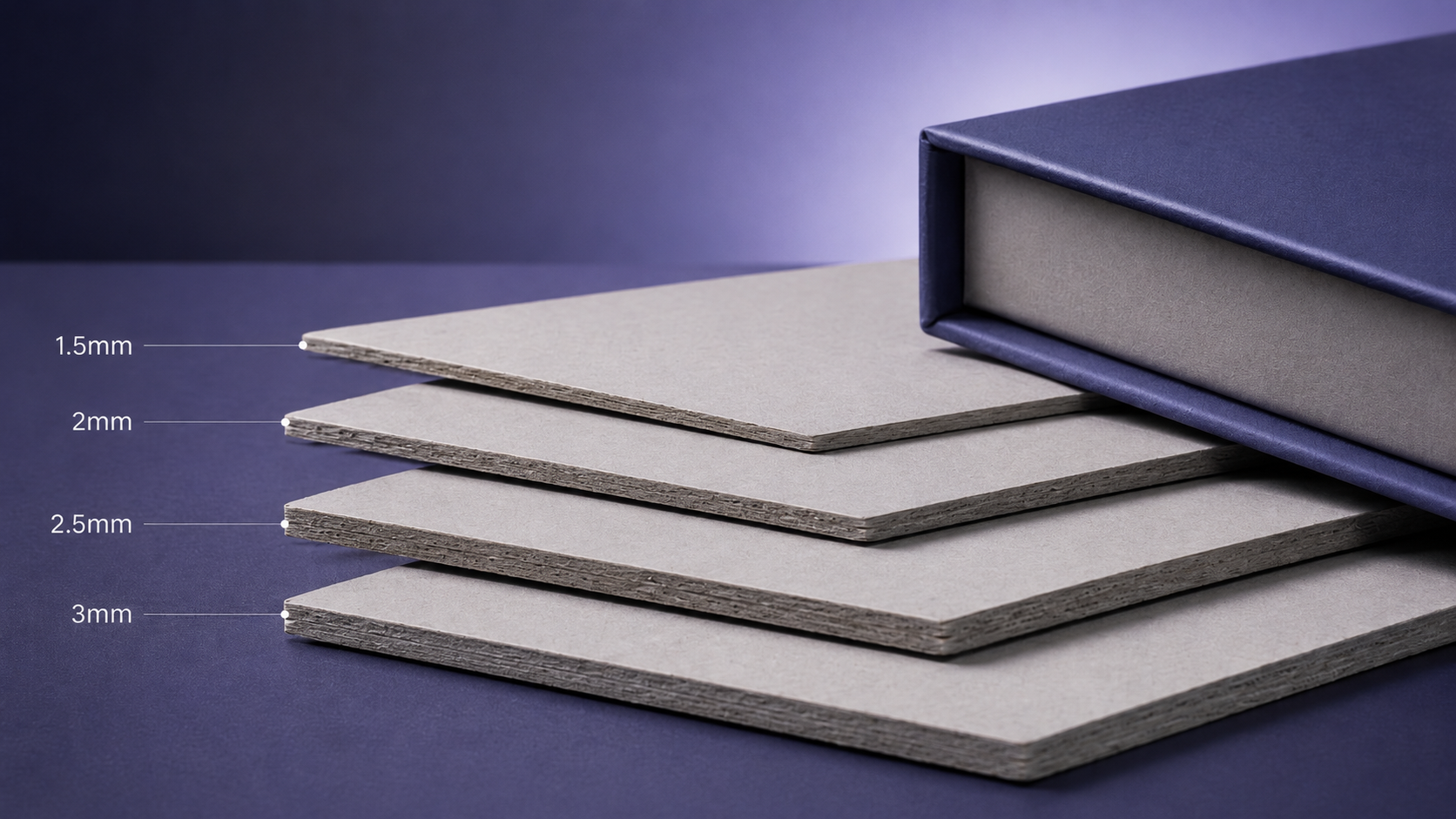
Greyboard thickness guide with 1.5mm 2mm 2.5mm and 3mm greyboard samples for rigid boxes
Recommended image: greyboard material samples showing different thickness options for premium rigid box manufacturing.
2. Greyboard Thickness Comparison Table
The table below gives a practical overview of common greyboard thickness options used in premium paper packaging. Actual selection may still change depending on box dimensions, paper wrapping, insert type, product weight, and testing requirements.
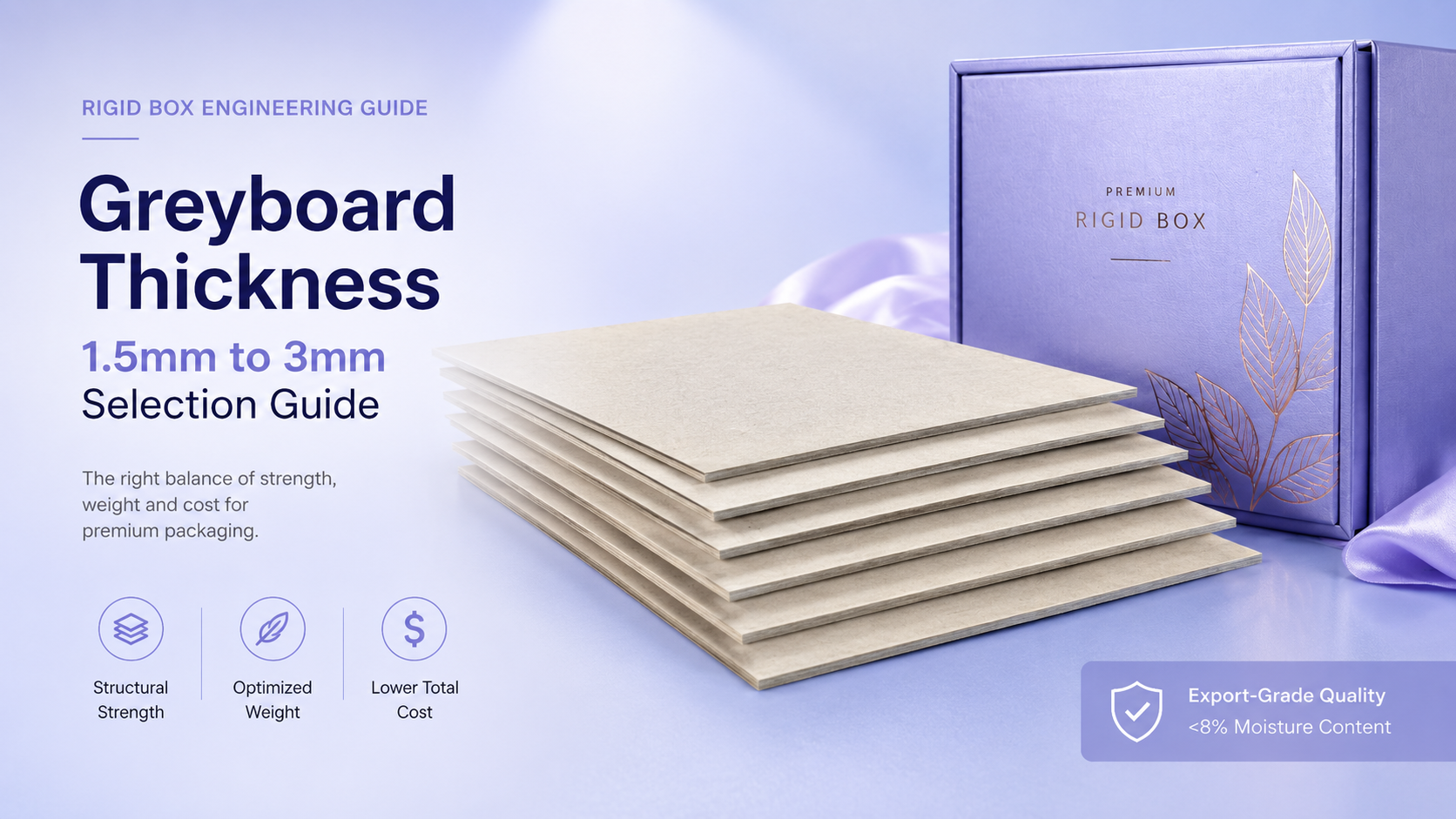
greyboard thickness
| Greyboard Thickness | Best For | Strength Profile | Buying Notes |
|---|---|---|---|
| 1.5mm | Small jewelry boxes, card boxes, lightweight cosmetics | Light and refined | Good for small formats, but not ideal for heavy products. |
| 2mm | Perfume boxes, skincare sets, chocolate gift boxes | Balanced rigidity | A practical choice for many mid-size luxury boxes. |
| 2.5mm | Premium spirits, glass bottles, luxury gift sets | Strong and stable | Often used when the product needs better wall strength. |
| 3mm | Large display boxes, heavy sets, high-end presentation kits | High structural rigidity | Suitable for large boxes, but may increase weight and cost. |
3. How to Choose the Right Greyboard Thickness
The first factor is product weight. Lightweight items such as cards, small jewelry pieces, or single cosmetic products usually do not require extremely thick board. For these projects, 1.5mm to 2mm greyboard can create a clean, elegant, and cost-effective structure. For heavier items such as glass perfume bottles, candles, premium wine accessories, or spirits, 2.5mm greyboard is often more suitable because it gives the side walls better resistance against deformation.
The second factor is box size. Larger rigid boxes need stronger board because the panel area is wider and more likely to bend. A 3mm board may be appropriate for a large presentation box, but it may be unnecessary for a compact magnetic closure box. The third factor is brand positioning. Luxury brands usually want a box that feels solid but not clumsy. The ideal structure should feel premium in the hand while still keeping clean proportions.
The fourth factor is the wrapping paper. Soft-touch paper, textured paper, specialty paper, art paper, and laminated paper all behave differently during wrapping. When the board is too thick, the corners may become harder to wrap neatly. When the board is too thin, the surface may not stay flat enough after gluing. This is why a packaging engineer should review the material combination before confirming mass production.

4. Inserts, Structure, and Box Performance
Greyboard thickness should not be evaluated alone. The internal insert can greatly influence the overall strength and user experience of the package. For example, EVA foam inserts can provide strong product protection for glass bottles, cosmetics, watches, and electronic accessories. Paperboard inserts are more environmentally friendly and can create a clean brand presentation. Molded pulp inserts may be preferred when sustainability is a key selling point.
For luxury spirits packaging, a 2.5mm rigid box paired with a well-fitted EVA or paperboard insert can often perform better than a 3mm box with a weak internal structure. The insert helps distribute pressure, keep the product centered, and reduce movement during transportation. This is especially important for glass bottles, limited-edition gift sets, and high-value retail packaging.
5. Logistics and Export Considerations
For export packaging, the box must survive more than a beautiful photo shoot. It may go through warehouse stacking, long-distance sea freight, humidity changes, loading pressure, and retail handling. A useful greyboard thickness guide should therefore include practical logistics questions: How heavy is the product? How many boxes will be stacked per carton? Will the goods travel by air or sea? Is the product fragile? Does the packaging need to support retail display?
Moisture control is also important. Greyboard and paper wrapping can react to humidity, especially during long ocean shipments. For premium projects, production teams may check board flatness, edge quality, glue performance, and moisture condition before shipment. You can also refer to the general paperboard classification to better understand how paper-based boards are commonly categorized.
6. Common Mistakes When Selecting Greyboard Thickness
One common mistake is choosing 3mm board simply because it sounds more premium. This can make small boxes look heavy and reduce cost efficiency. Another mistake is focusing only on the outer box while ignoring the insert. For fragile or heavy products, the internal support often matters as much as the board thickness. A third mistake is skipping sampling. Even when the thickness looks correct on paper, the final decision should be based on a physical sample because opening feel, edge appearance, wrapping quality, and product fit can only be confirmed after prototyping.
At PackPrince, our team reviews product dimensions, weight, structure, material finish, and shipping method before recommending a board thickness. Instead of using one fixed specification for every project, we match the greyboard, insert, wrapping paper, and finishing process to the real packaging scenario. This approach helps brands achieve a better balance between protection, appearance, cost, and customer experience.

7. FAQ: Greyboard Thickness Guide
Q: Is greyboard density the same as greyboard thickness?
A: No. Thickness refers to the board measurement, while density relates to how compact and firm the board is. A high-density 2.5mm board may perform better than a lower-density 3mm board in some packaging structures.
Q: What greyboard thickness is best for heavy products?
A: For heavier products such as glass bottles, luxury candles, or premium gift sets, 2.5mm to 3mm greyboard is usually recommended. The final choice should also consider insert design and carton packing method.
Q: Can I use thinner greyboard to reduce cost?
A: Yes, but only when the product weight, box size, and protection requirements allow it. Reducing thickness without structural review may cause deformation, poor shelf presentation, or higher damage risk during transportation.
Q: Should I confirm greyboard thickness before sampling?
A: Yes. The sample stage is the best time to verify board thickness, wrapping paper, insert fit, opening experience, and overall brand presentation before mass production.
Need a custom rigid box structure plan?
Send us your product size, weight, and packaging style. PackPrince can recommend the right greyboard thickness, insert solution, and finishing process for your custom rigid box project.