Packaging Stacking Pressure: Why Luxury Boxes Crush in Transit
Jump to Section:
A luxury rigid box may look flawless in a sample room, but the ocean freight supply chain is a brutal environment. When loaded into a shipping container, the boxes at the bottom of a pallet endure immense packaging stacking pressure. If engineered poorly, the structural integrity of the rigid board will fail, resulting in crushed corners, warped lids, and unsellable merchandise. This guide exposes the physics of transit failures and how to engineer packaging built for global distribution.
I. The Brutal Physics of Container Logistics
Many procurement managers calculate structural safety based on “static load”—the weight of boxes sitting still in a warehouse. This is a dangerous miscalculation. During a 30-day ocean voyage, ships experience pitch and roll, multiplying the gravitational force on your pallets. This creates a “dynamic load.”
If your pallet is stacked 1.8 meters high, the packaging stacking pressure on the bottom layer can temporarily triple during rough seas. If you utilized a standard 1.5mm low-density greyboard to save costs, this kinetic energy will immediately crush the vertical walls of the rigid box. The result is a domino effect: the master carton buckles, the rigid boxes deform, and the premium product inside is compromised.
II. The Moisture Factor in Structural Failures
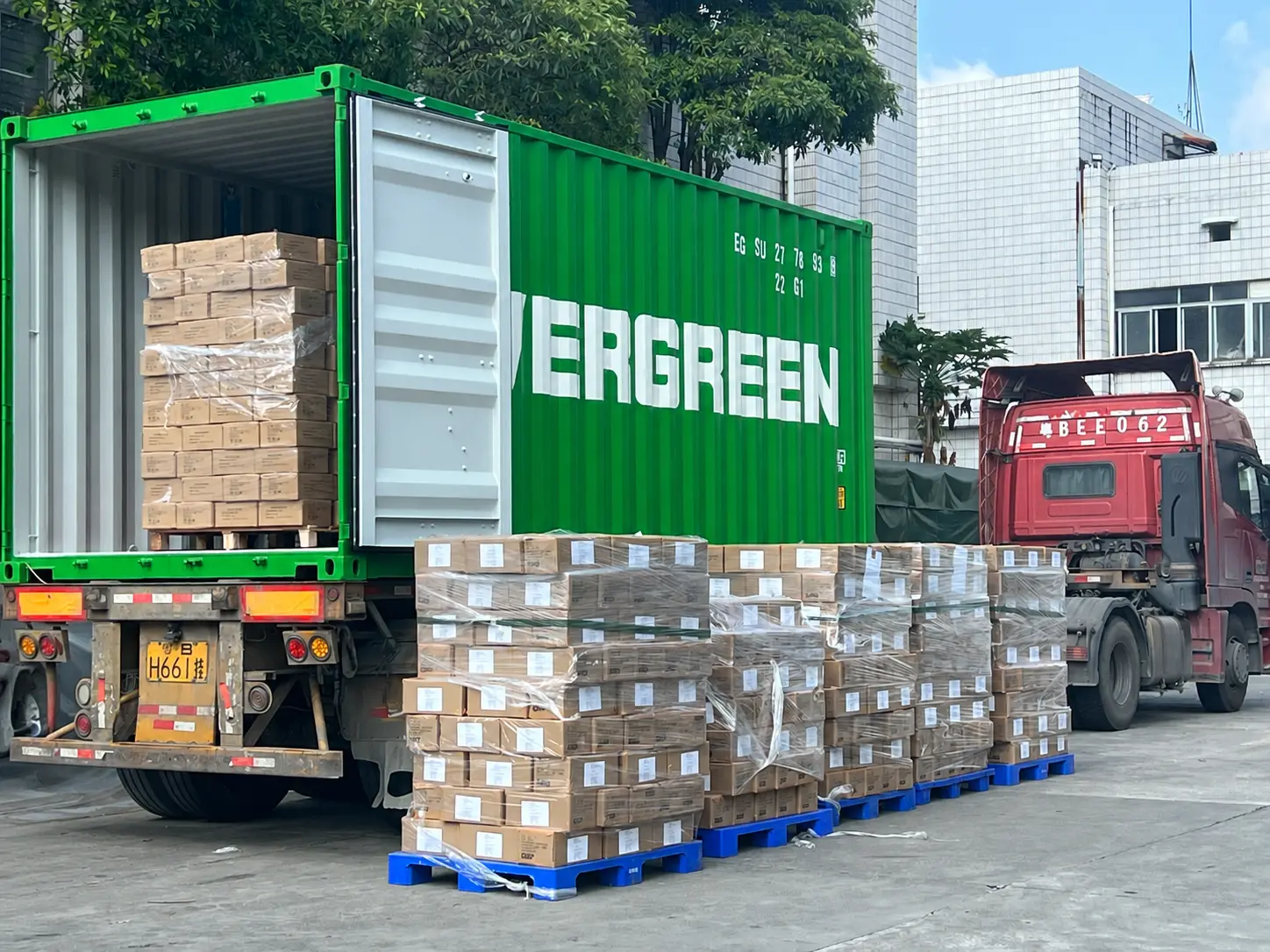
Another critical element that destroys structural integrity is humidity. Ocean freight containers often act as tropical microclimates. When the moisture content of your corrugated master cartons and rigid greyboard exceeds 10%, the paper fibers begin to soften. This moisture absorption drastically reduces the board’s ability to withstand packaging stacking pressure.
Even if you specified a thick 3mm greyboard, high humidity will compromise the structural adhesive and the core fibers. At PackPrince, we strictly monitor factory humidity and demand a moisture content report < 8% before shipment. We also engineer specific desiccants into the container loading plan to ensure the cardboard retains its maximum compressive strength throughout the entire voyage.
III. Mitigating Stacking Pressure: Structural Defense
To survive international logistics, structural defense must be engineered at two levels: the inner rigid box and the outer export carton.
First, the rigid greyboard must be high-density (minimum 2.5mm to 3mm for heavy items like spirits). High-density board prevents the vertical sheer walls from buckling under compression. Secondly, we refer to the Box Compression Test (BCT) standards. The outer master carton must be a 5-ply (Double-Wall) corrugated board with a high Edge Crush Test (ECT) rating. The outer carton should bear the primary packaging stacking pressure, transferring the weight down to the wooden pallet, rather than onto the luxury boxes inside.
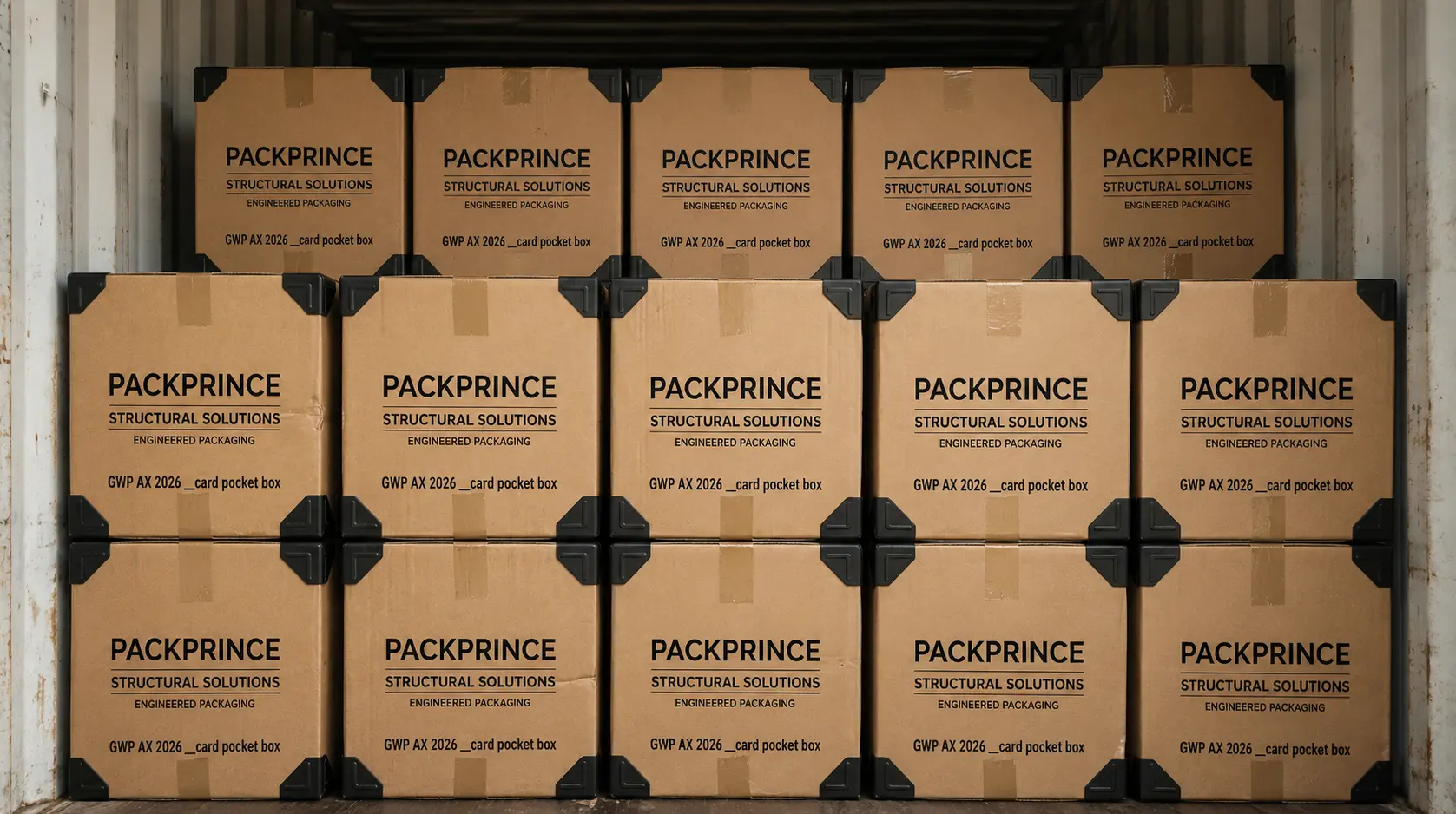
Export master cartons with black corner protectors engineered to resist packaging stacking pressure during ocean freight.
IV. Engineering Specs for Export-Grade Pallets
At PackPrince, we do not leave supply chain survival to chance. Our engineering SOP demands strict adherence to the following logistics parameters:
| Logistics Element | The PackPrince Standard | Risk Mitigated |
|---|---|---|
| Rigid Box Core | High-Density 2.5mm – 3mm Greyboard | Prevents internal shelf-edge deformation. |
| Master Export Carton | 5-Ply K=K Corrugated, Moisture < 8% | Absorbs dynamic load and resists high humidity. |
| Palletization | Corner protectors + 4-layer stretch wrap | Prevents lateral shifting and pallet collapse. |
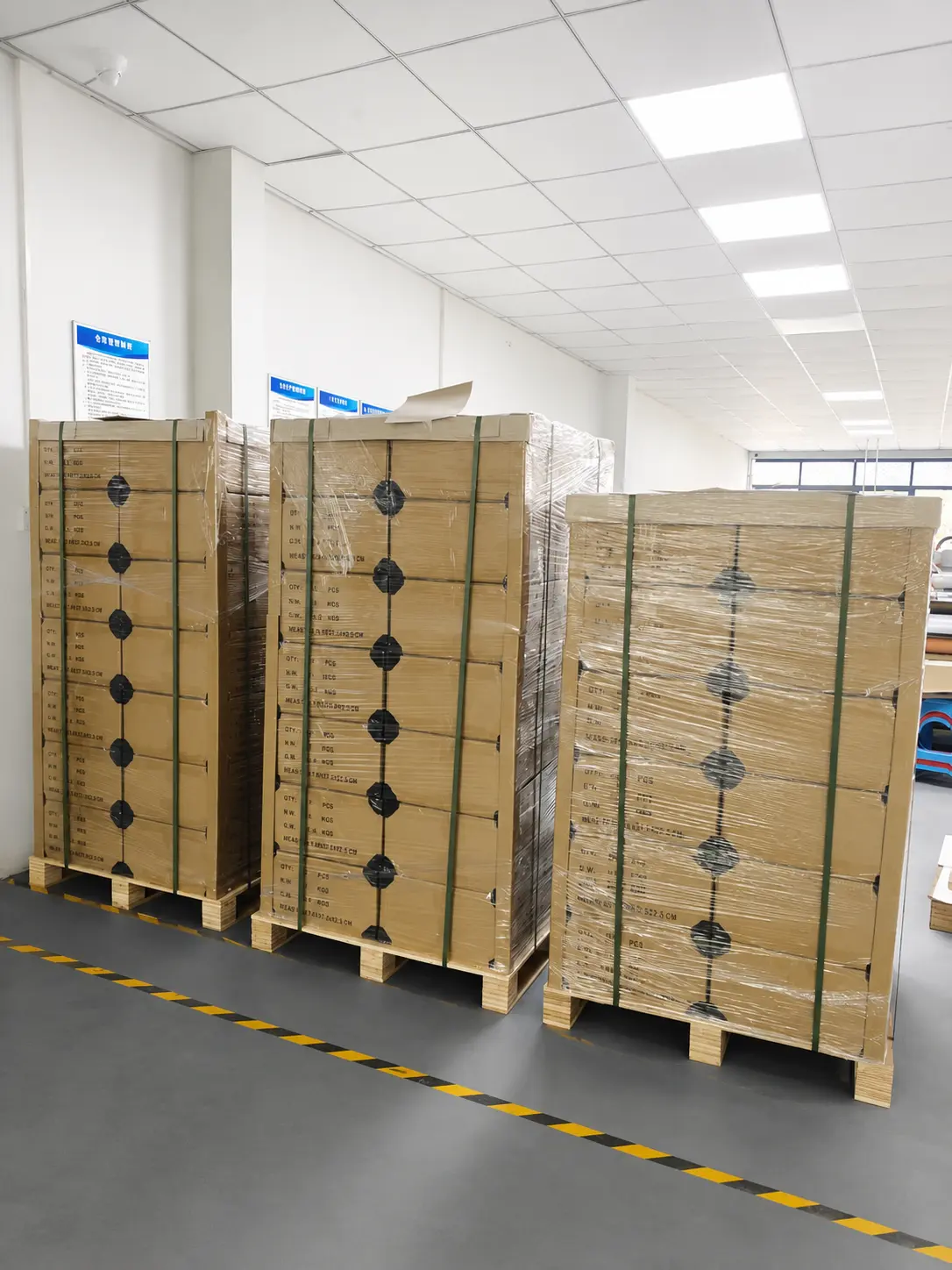
Export-grade pallets with 4-layer stretch wrap and edge protectors preventing packaging stacking pressure failures.
V. FAQ: Protecting Your Investment in Transit
A: They likely engineered for static load only, ignoring the dynamic packaging stacking pressure of ocean freight. Low-density board will fail after weeks of ship vibration and compressive force.
A: Yes. Collapsible rigid boxes distribute weight differently and eliminate the empty “air space” inside the box, drastically increasing the overall crush resistance of the master carton.
A: Yes, but air freight focuses more on volumetric weight rather than extreme packaging stacking pressure. However, maintaining high ECT standards is still mandatory to survive tarmac handling and forklift transport.
Stop Paying for Damaged Goods
Do not let weak structural engineering ruin your product launch. Send us your product dimensions, and we will calculate the exact material specs required for safe global transit.