Peptide Vial Packaging Inserts: Paperboard vs EVA vs Molded Pulp vs PET
Jump to Section:
Category · Medical & Aesthetic Packaging / Insert Engineering
The insert is not decorative filler. It controls vial movement, opening force, label contact, pack-out speed and the final box depth. For 3 mL and 10 mL vials, the wrong insert can make a structurally strong box perform badly even when the outer packaging looks premium.
Engineering answerChoose the insert after defining the actual vial geometry, vial count, removal method, distribution risk and target box structure. Paperboard is efficient and paper-led but depends heavily on fold geometry. EVA gives precise presentation and high retention but adds material complexity. Molded pulp can reduce plastic content at scale but requires tooling and tolerance validation. Thermoformed PET or similar trays can deliver repeatable cavities and rapid pack-out, but material specification and recycling strategy must be considered explicitly.
The insert starts with the product envelope—not the nominal vial volume
A buyer may describe a container as a “3 mL vial” or “10 mL vial,” but nominal volume does not tell the packaging engineer the maximum outside diameter, crimp diameter, cap height, shoulder profile, label position or dimensional tolerance. Those values determine where the insert should touch the product and where it must deliberately avoid contact.
For a new vial program, create a product-envelope sheet with at least the maximum body diameter, overall height, maximum closure diameter, shoulder location, label area and total packed weight. If the box contains a diluent vial, syringe, pen, alcohol swab, instruction booklet or adapter, record those components in the same drawing. A multi-component kit should be engineered as one system rather than as a vial tray with “spare space” added later.
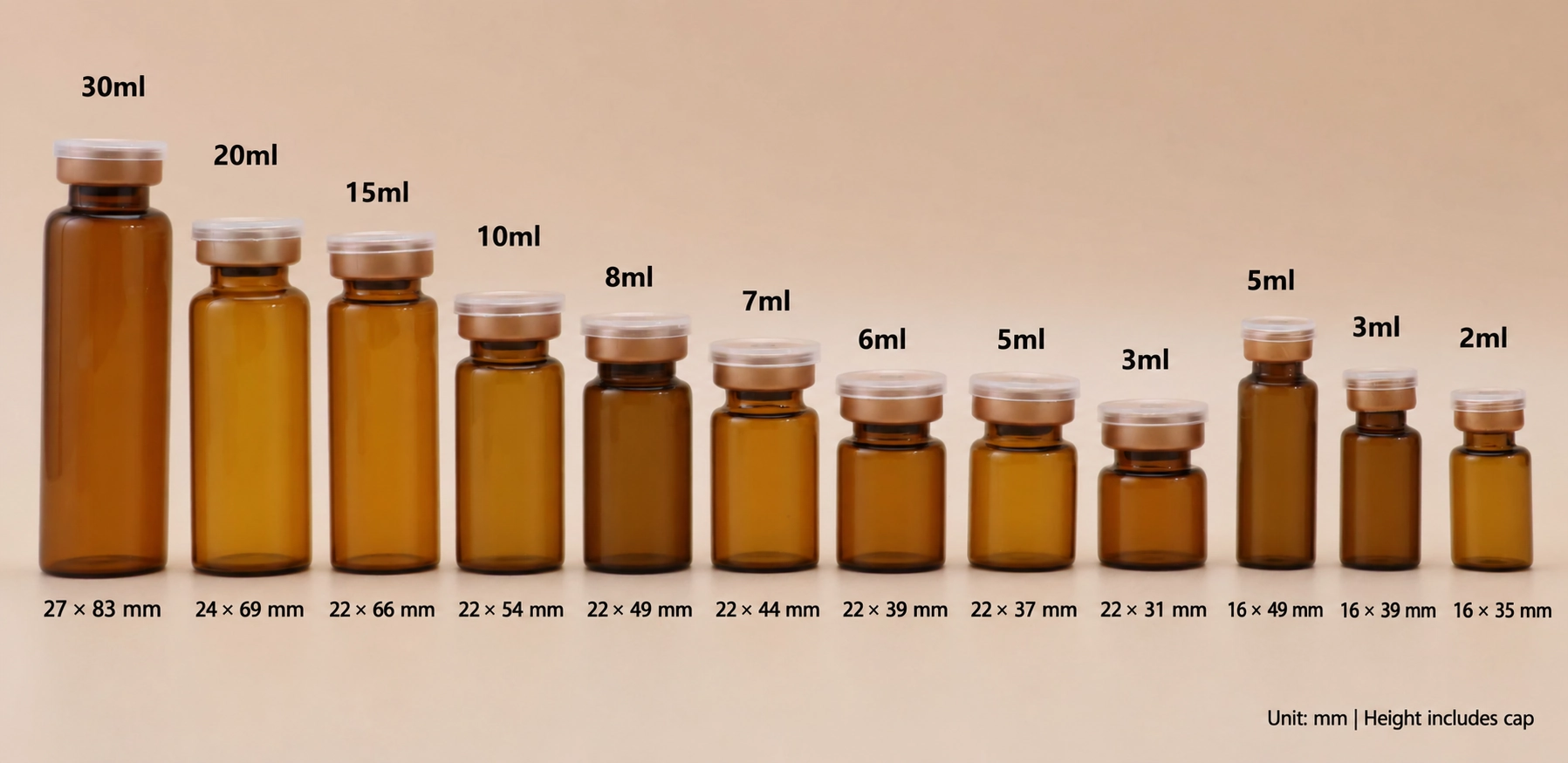 An original measurement photo is more useful than a generic render because it demonstrates how the cavity is derived from the real container.
Paperboard inserts: best when geometry can do the retaining work
A die-cut paperboard insert is not simply a flat card with a circular hole. The more capable designs use folded bridges, double walls, locking tabs, raised platforms and undercuts created by paper geometry. Those features let the insert control the vial without relying on a thick foam block.
Where paperboard works well
- Single-vial or low-count packs where the vial can be retained at two or more points.
- Folding cartons where the insert should ship flat and be assembled during pack-out.
- Rigid presentation boxes where a paper-led material direction is important.
- Kits with a leaflet compartment that can be integrated into the same folded structure.
Where paperboard becomes difficult
Very short vials, large diameter variation, highly irregular accessories and shallow cavities can make a paper insert unstable. Paper also has memory: folds try to spring back, especially when grain direction, coating and scoring are poorly matched. A cavity that looks correct in CAD may open slightly after assembly and allow a vial to rattle.
EVA and foam: precise presentation, but compression is part of the dimension
EVA is common in premium vial kits because it can create clean, repeatable cavities in magnetic book boxes, drawer boxes, lid-and-base boxes and shoulder-neck structures. It also allows different components to sit at controlled heights. The engineering mistake is treating the die-cut opening as if it were a rigid dimension.
Foam deforms. The same 20 mm cavity can grip very differently depending on foam density, thickness, surface skin, flocking, lamination and cut method. If the opening is too tight, the vial can be hard to remove or the label can rub against the cavity wall. If it is too loose, the kit may rattle and the visual alignment can shift.
Useful EVA details to approve
- Foam grade and density
- Total foam thickness
- Cavity profile and taper
- Finger notch geometry
- Top clearance under the lid
- Surface treatment or flocking
- Adhesive method to the box base
- Odor and surface-cleanliness expectations
Molded pulp: attractive for plastic reduction, but tooling must be treated as tooling
Molded fibre can be a strong option when a brand wants a paper-fibre insert and the order volume justifies a formed tool. It can create integrated wells, ribs, finger access and accessory channels that would be complex to fold from paperboard.
However, molded pulp should not be specified only as “eco insert.” The buyer should approve the fibre colour, surface texture, wall thickness direction, edge finish, nesting behaviour, dust expectations and acceptable dimensional range. The first tool sample should be tested with real vials from the production supply chain, not only with one ideal reference sample.
It is also useful to distinguish between a presentation-grade dry-pressed fibre tray and a rougher protective pulp format. The same broad material name can refer to very different surfaces and tolerances.
Thermoformed PET/APET trays: repeatability and fast pack-out
Thermoformed trays are widely used when brands want a clean cavity, visible product, efficient loading and consistent geometry. They can support 2-, 5-, 10- or larger vial arrays without the assembly steps of a complex folded-paper insert.
For a production specification, define the polymer rather than writing only “plastic tray.” Clarify whether the tray is PET, APET, rPET or another agreed resin; its colour or transparency; material thickness; anti-static or surface requirements if relevant; and whether a printed or paper cover card will be applied.
Tray design should include enough draft and release geometry for manufacturing, while the product pocket should avoid sharp contact with the vial label and closure. In multi-vial arrays, bridges between cavities must also remain stiff enough that loading one vial does not distort the neighbouring pocket.
A practical insert comparison
The peptide vial packaging inserts and box structure should be selected together
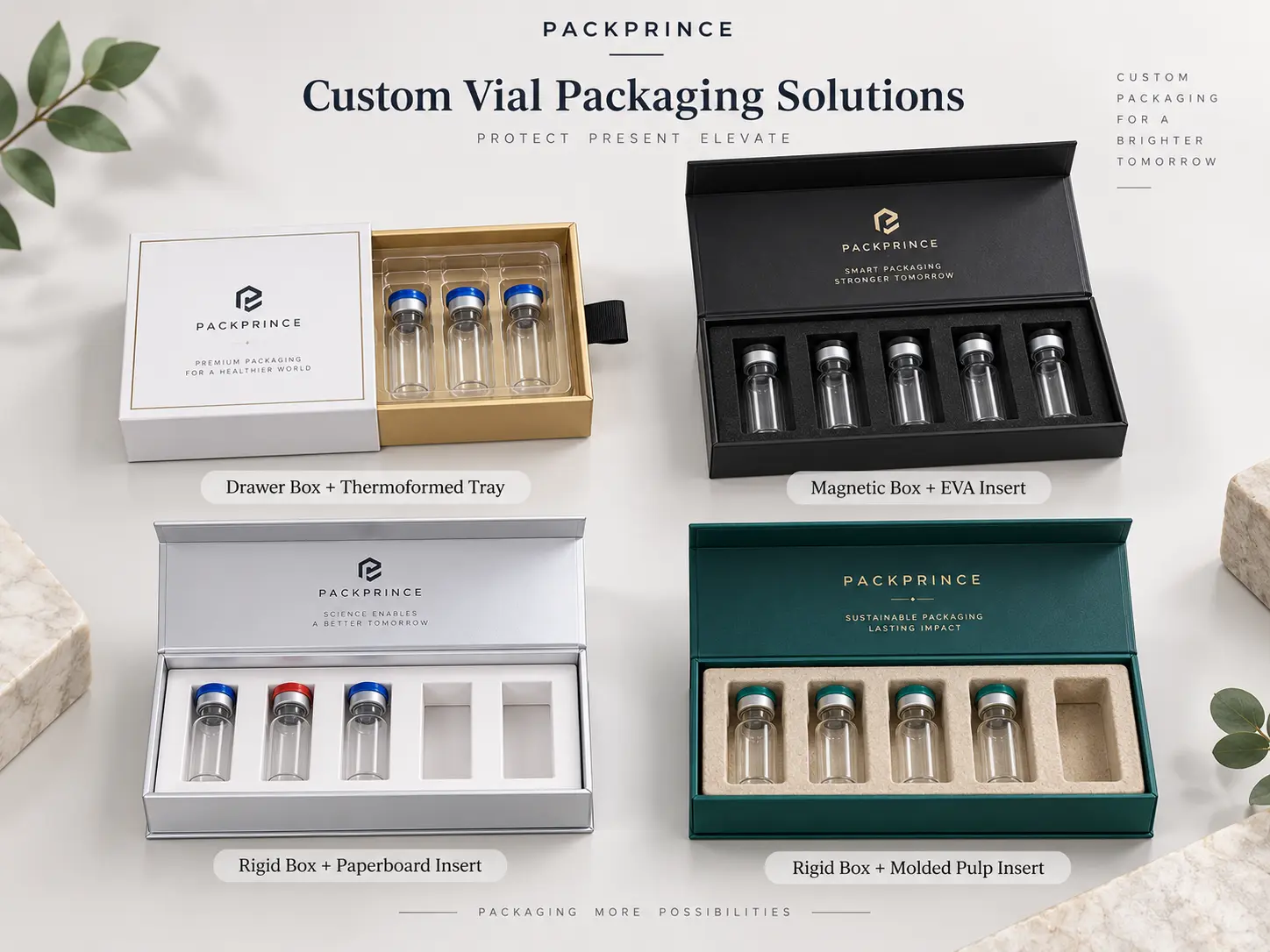
peptide vial packaging inserts-Use a real Packprince comparison photo or factory layout showing the same or similar vial pack in different structural directions.
Approve the insert with the real product and the real removal motion
A successful cavity is not defined only by “the vial fits.” Load the complete kit, close the final box, turn it through likely handling orientations and reopen it as a customer would. Check whether the product has migrated, whether caps touch the lid, whether labels show rub marks and whether a user can remove the vial without digging a fingernail into the insert.
- No hard pressure on the vial closure
- No visible label scuff after repeated insertion/removal
- No excessive rattle during gentle shake test
- Finger access works for intended user
- Insert does not lift out with the product
- Accessory pockets retain their contents
- Box closes flush under full load
- Tray or foam remains aligned after transit simulation
For structure selection after the insert direction is clear, read Single-Vial to 12-Vial Packaging: Which Box Structure Works Best?. For the broader sourcing path, see Packprince’s peptide vial packaging sourcing guide.
Frequently Asked Questions
Which insert is best for a 3 mL or 10 mL vial?
There is no universal best insert. The choice should follow the actual vial diameter, closure geometry, vial count, removal method, box structure, order volume, and sustainability target. Paperboard suits efficient paper-led structures, EVA suits precise premium presentation, molded pulp becomes more attractive at suitable tooling volumes, and thermoformed PET/APET can improve cavity repeatability and pack-out speed.
Should the insert be designed from nominal vial volume?
No. A 3 mL or 10 mL description is not enough to engineer a cavity. Use the maximum body diameter, overall height, closure diameter, shoulder profile, label area, and real production samples whenever possible.
Can the same insert design be used in a folding carton and a rigid box?
Sometimes, but it should not be assumed. A folding carton, drawer box, magnetic book box, and lid-and-base rigid box place different loads on the insert and offer different internal clearances. The insert and outer structure should be validated as one system.
Need the insert engineered before the artwork?
Send the actual vial dimensions, vial count, accessories and preferred opening style. Packprince can develop the insert and box as one controlled structure, then confirm fit with a physical sample before mass production.