Whisky Composite Paper Tubes vs. Full Metal Cans: Engineering Guide
Jump to Section:
A common misconception among emerging spirits brands is that “full metal packaging equals luxury.” In reality, for experienced procurement managers, relying on full metal cans introduces severe logistical liabilities and tactile limitations. This engineering guide explains why whisky composite paper tubes have replaced full metal containers as the definitive standard for premium single malts and high-end blends.
I. The Brutal Flaws of Full Metal Cans
Before evaluating paper alternatives, we must objectively analyze why full tinplate or aluminum cans often fail the luxury stress test in real-world supply chains.
- The Permanent Deformation Risk (Denting): Metal is rigid but lacks rebound memory. A minor impact during sea freight or warehouse handling will leave a permanent dent. A dented $150 whisky canister is immediately deemed unsellable.
- The Tactile Deficit: Luxury packaging relies heavily on touch. Full metal cans utilize flat offset printing on cold, rigid surfaces. They cannot accommodate the deep blind embossing, textured specialty papers, or uncoated tactile finishes that signal premium quality. Consequently, they often feel closer to mass-market biscuit tins than luxury spirits.
- Tooling Extortion: Creating a custom-sized full metal can requires expensive metal stamping molds, often exceeding thousands of dollars, accompanied by inflexibly high Minimum Order Quantities (MOQs).
II. The Structural Logic of Whisky Composite Paper Tubes
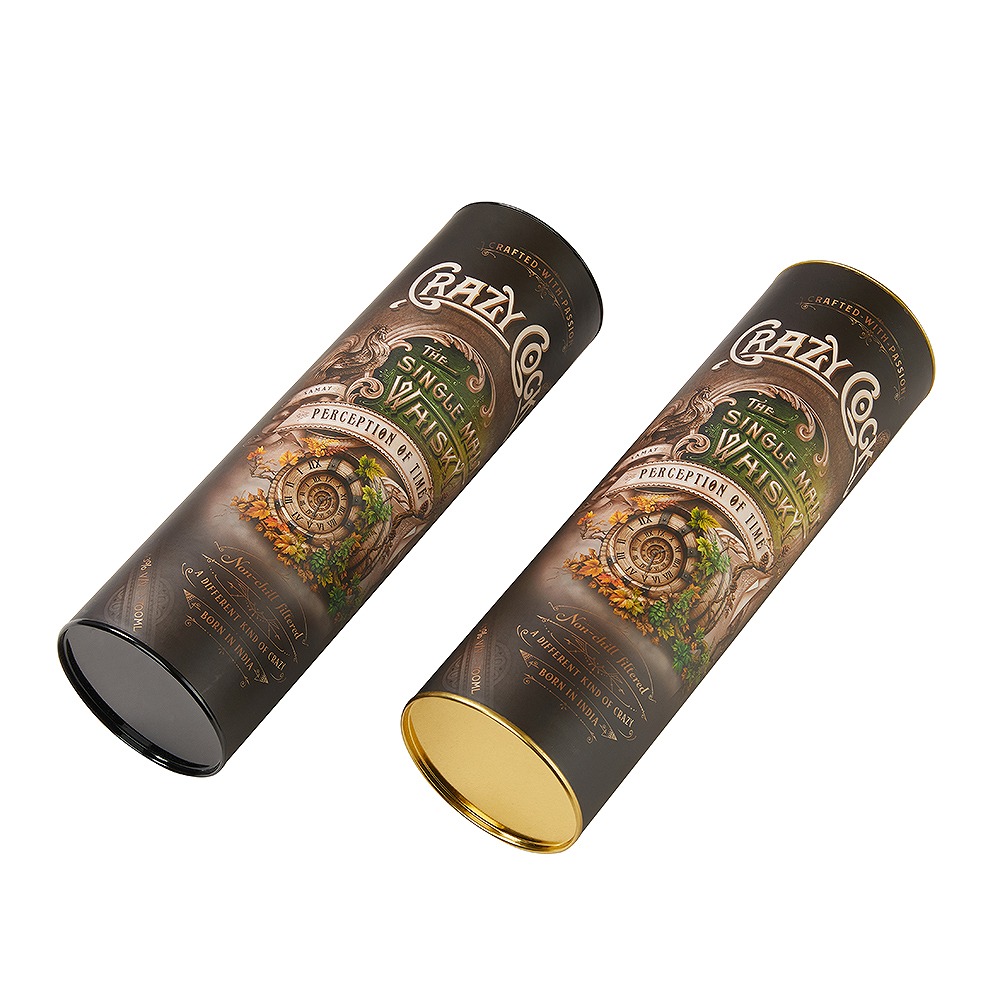
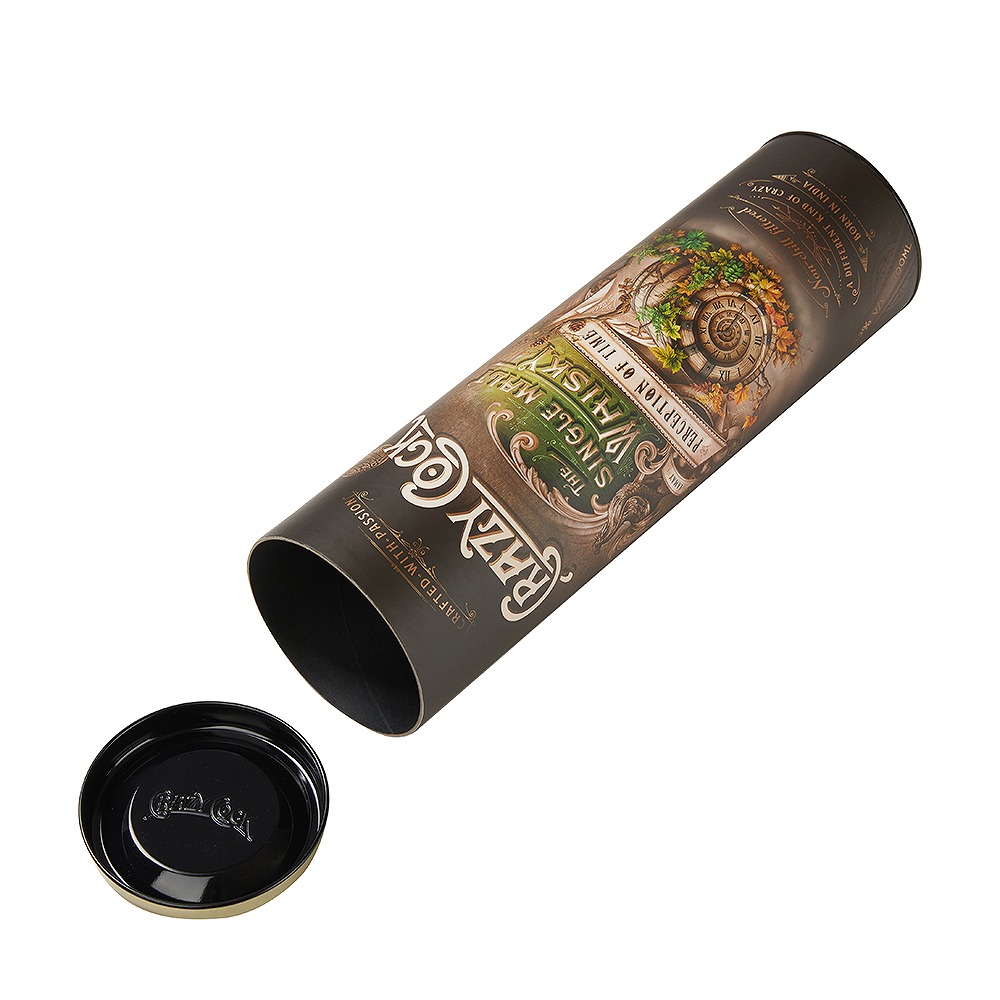
The industry pivot to whisky composite paper tubes is not a cost-cutting measure; it is an engineering optimization. A composite tube combines a high-density spiral-wound kraft core with rolled tinplate ends (lid and base).
This hybrid structure offers the best of both materials: the tinplate base provides the absolute rigidity needed to support a heavy glass bottle, while the thick paperboard core acts as a shock absorber. Unlike metal, high-density paperboard can disperse minor impact forces without permanently denting, drastically reducing your damage rate during global distribution.
III. Identifying the Vulnerabilities of Composite Tubes
While whisky composite paper tubes are structurally superior, they are not without manufacturing risks. Procurement teams must audit their suppliers against these specific failure points:
- Seam Splitting: The outer specialty paper is wrapped around the core and glued. If the factory uses low-grade adhesive or fails to control factory humidity, the overlapping seam will split and peel after 30 days in a shipping container.
- Dimensional Instability: If the inner kraft paper is wound with insufficient tension, the tube will lack radial crush resistance, leading to oval-shaped deformation that makes the tin lid impossible to remove.
- Oxidation of Metal Components: Low-grade tinplate bases can rust if exposed to high humidity environments.
IV. Strategic Engineering: Mitigating the Risks
The risks associated with whisky composite paper tubes are entirely preventable through rigorous quality control. At PackPrince, we treat paper tubes as precision engineering projects.
We utilize moisture-controlled winding environments to ensure the kraft core maintains a moisture content below 8%, preventing dimensional warping. Our automated wrapping machines apply high-tack, climate-resistant adhesives to guarantee seamless edges. Furthermore, all our tinplate components are treated with an anti-oxidation clear coat, completely neutralizing the rust risk even in maritime transport. This structural discipline ensures your packaging arrives immaculate, protecting your brand equity.

whisky composite paper tubes
V. FAQ: Mastering Composite Tube Packaging
A: Yes, absolutely. We engineer the wall thickness (usually 1.5mm to 2mm) and incorporate a rolled tinplate base with an inner cardboard collar to securely bear loads up to 3kg without structural fatigue.
A: The tooling cost for whisky composite paper tubes is a fraction of full metal cans. Adjusting the height of a paper tube requires zero tooling changes, allowing extreme flexibility for different bottle sizes within your product line.
Eliminate Logistics Risks. Upgrade Your Packaging.
Do not compromise your brand with easily dented metal cans or poorly glued paper tubes. Send us your bottle dimensions for a structural assessment.